Close
|
|


|
|


Follow us on 
@Ask_ICAR for daily updates.
Your job requires that you keep on top of the latest in vehicle, tool, and equipment technology – I-CAR is committed to helping you do so in one convenient place. We regularly publish new articles highlighting the latest and greatest collision repair information.
So check back often and follow us on X @Ask_ICAR to ensure you’re equipped with the most up-to-date collision repair technical information available in the industry.
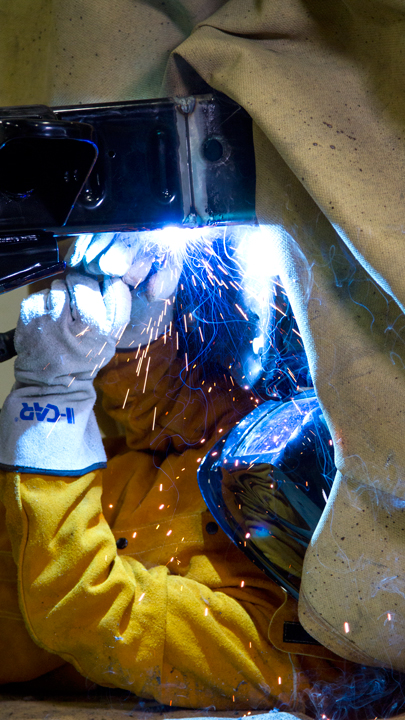
Once people get used to calling something one thing, it's difficult to change it. To be technically accurate, whether it's MIG or MAG depends on the shielding gas.
When GMA (MIG) welding started its rise, it was often referred to simply as MIG welding. While this term is widely known, it's not technically accurate. MIG stands for "Metal Inert Gas" and is accurate when making welds using an inert shielding gas, such as 100% argon when welding aluminum. However, for most collision repairs on steel parts, we use a shielding gas that is 75% argon, 25% carbon dioxide (often called 75/25, or C-25). Because carbon dioxide is an active gas, the correct term would be metal active gas (MAG) welding.
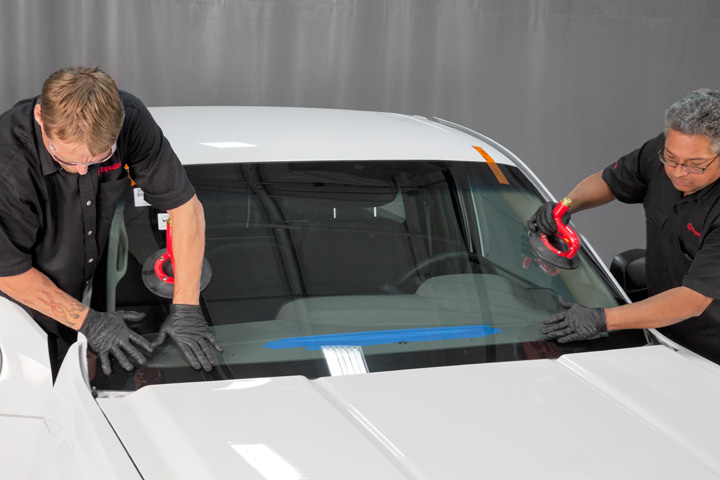
I-CAR recognizes minimum driveaway time for urethane adhesive. This is a time specification that the glass industry has agreed on when a vehicle that has had a stationary glass replacement can be released to the customer. It is when the adhesive has achieved enough strength to pass Federal Motor Vehicle Safety Standards (FMVSS) 212, windshield retention, and 208, occupant protection.
When it comes to repair information, vehicle makers use a wide variety of terminology for replacement parts. All of the different names can be confusing, especially when repairing a variety of vehicle makes and models.
by Society of Collision Repair Specialists (SCRS)
Prosser, Washington, September 25, 2014 - The collision repair industry benefits from accessibility to clear and concise documentation regarding processes and procedures that are necessary to produce warrantable repairs. In July, the Society of Collision Repair Specialists (SCRS) issued a request to automotive refinish coatings manufacturers with an intent to update documentation on the issue of mid-panel clearcoat blending. Previous correspondence collected 10 years prior had demonstrated a consistent requirement for clearcoat application to extend across an entire panel, to the nearest breakpoint, in order for the repairs to be covered under refinish manufacturer warranties.
For your convenience, we've provided you with a few different options for navigating the I-CAR Repairability Technical Support (RTS) Portal at rts.i-car.com.
When you are on the rts.i-car.com home page, you can click any of the rectangular pictures, or buttons, that are in the center of the page.

Kia Motors now has sectioning procedures available for the 2015 Sedona. This information has also been updated on the I-CAR developed OEM Partial Parts Replacement Search. The body repair manuals for Kia are available on the Kia free website at: www.kiatechinfo.com
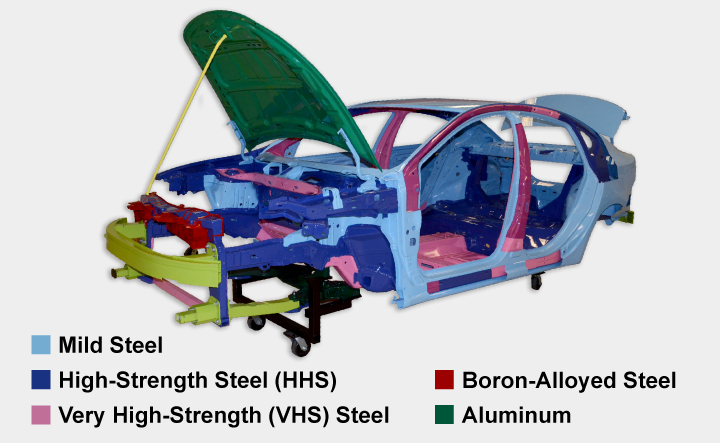
Repair or Replace? – Material Tensile Strength Key to Repairability
Jason Bartanen, I-CAR Director, Industry Technical Relations
The world of steels continues to evolve at a rapid pace and repair professionals need to keep up. In order to perform complete, safe, and quality repairs, it’s imperative to identify the type of material we’re working with, to know what is repairable, and know which options we have for part replacement when straightening is not an option.

by Chuck Olsen, Collision Diagnostic Services (CDS)
Strategy Based Diagnostics is an automotive best practice routine that was initially published by GM after studying and observing successful technicians in the field who consistently meet or exceed productivity standards with the lowest levels of "re-checks" or "comebacks." Since GM published this best practice, Strategy Based Diagnostics has been adopted by most in the automotive repair field.
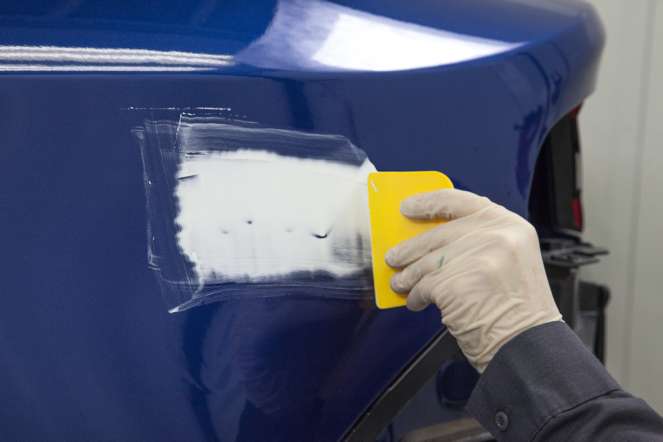
Have you ever used glazing filler to help remove a run in clearcoat? Yes, I'm serious it really does work.
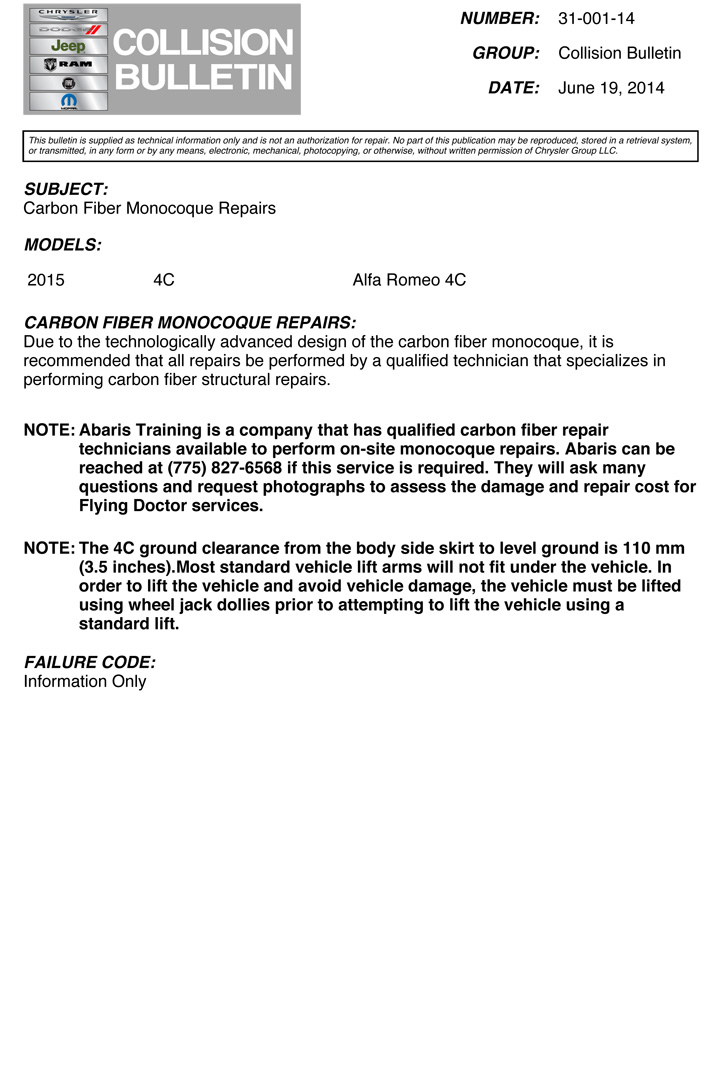
We've added the Carbon Fiber Monocoque Repairs Collision Bulletin from FCA/Stellantis that addresses carbon fiber repairs to the monocoque of the 2015 Alfa Romeo 4C.
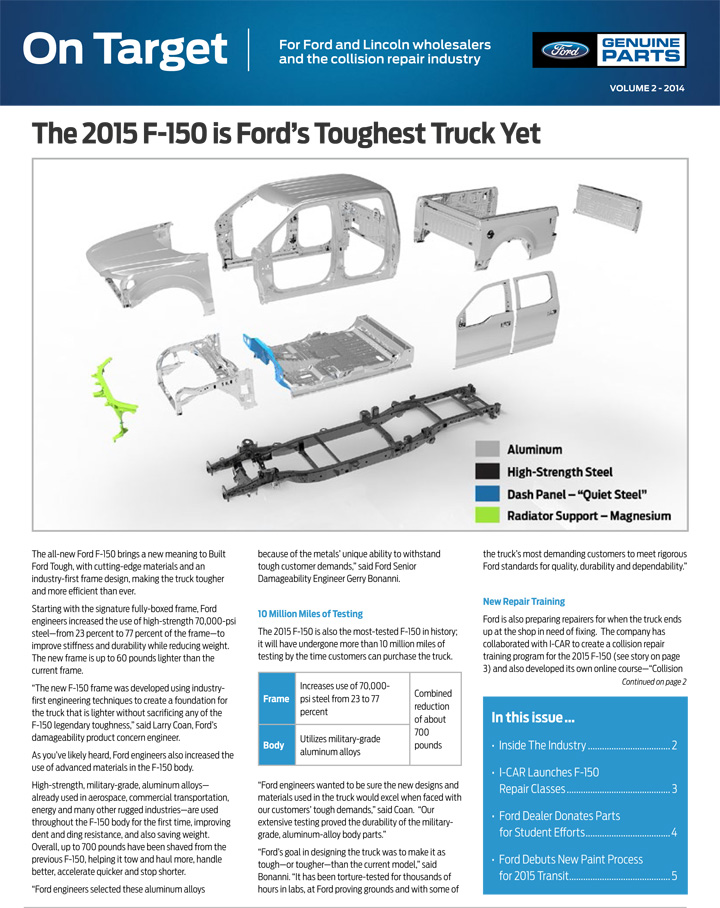
Ford has released the second installment of their On Target publication for 2014.
Kia Motors now has sectioning procedures available for the 2011-14 Sorento and the 2007-10 Rondo. This information has also been updated on the I-CAR developed OEM Partial Parts Replacement Search. The body repair manuals for Kia are available on Kia's free website at: www.kiatechinfo.com
Want to be the first to hear about new I-CAR Collision Repair News articles? Then come follow us on X, formerly known as Twitter @Ask_ICAR.
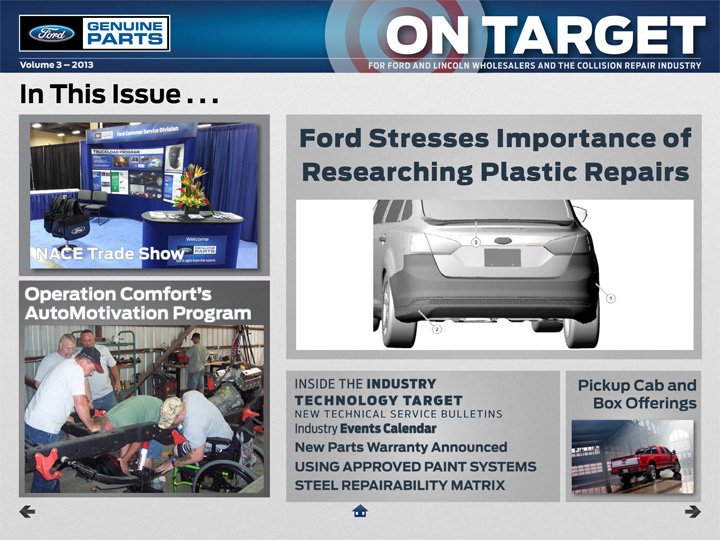
You may or may not have read them, so here's your chance to catch up! Archived issues of the Ford On Target publication from 2013 are now available.
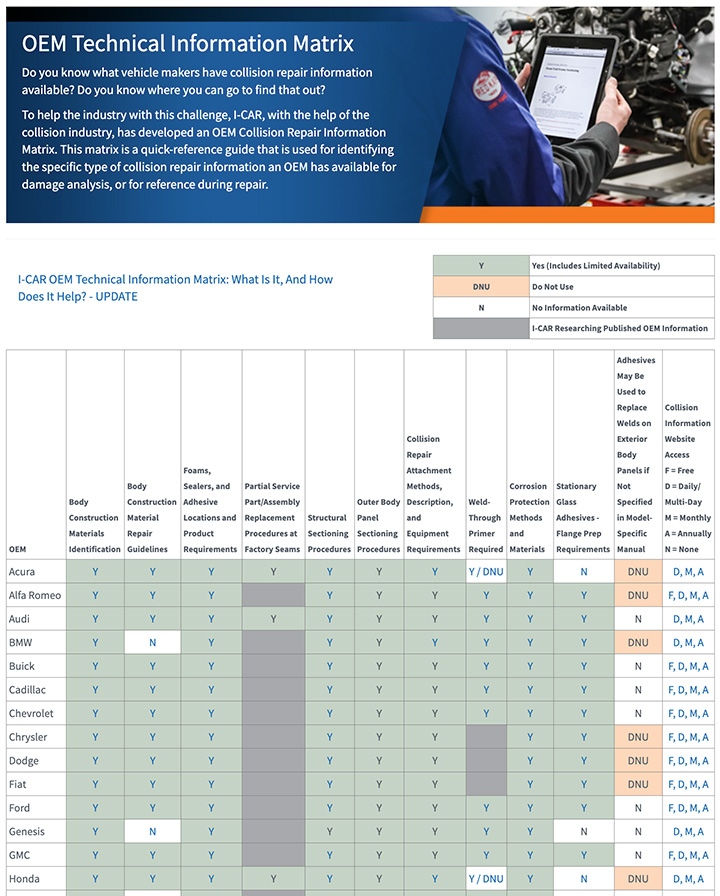
Let's continue our breakdown of the columns in the OEM Technical Information Matrix. The eighth column calls out if the vehicle maker requires the use of weld-through primer on flanges in preparation for welding.
As the industry continues to ask if pre- and post-repair system scanning is necessary, Toyota/Lexus/Scion provides their answer.
Are you wondering if a particular OEM or organization has a published statement on pre-repair and post-repair scanning? We have compiled a list of most of the statements on the subject, so you can...
Since advanced driver assistance systems (ADAS), scanning, and calibration first started becoming relevant, members of the collision repair industry have required as much knowledge as possible on...
BMW has released a position statement related to pre- and post-repair system scanning. The statement applies to All vehicles equipped with on board diagnostics II (OBD II).
Honda/Acura has updated their position statement on pre- and post-repair scanning to give additional clarification on what is expected for scanning.
The I-CAR best practice article, Recycled Outer Quarter Panels w/Rolled Hem Flanges has gotten a lot of interest from the collision repair industry. It’s important to know which vehicles are...
As the industry continues to ask, are pre- and post-repair scans necessary, General Motors provides their answer.
Over the past few months, we've been sharing OEM position statements on restraints wiring repairs. Now we're bringing them all together in one place for easy reference.
Technicians should be aware of what’s required to keep advanced driver assistance systems (ADAS) running safely after a collision. Whether that be aiming a camera, which can cause a system to not...
FCA/Stellantis has released a position statement related to pre- and post-repair system scanning.
Sometimes, going back to basics can make the difference between a quality repair and a failed repair. There are a few things to keep in mind when it comes to GMA welding with adhesive bonding.
What should you do when a damaged Lucid comes into your repair facility? Do you measure it? Can it be straightened? What needs to be replaced?
We are often asked, “What do I do if there isn’t a procedure to replace a service part?” Let’s see what Toyota/Lexus says.
As the industry continues to ask, are pre- and post-repair scans necessary, Lucid provides their answer.
I-CAR had a discussion on Ford advanced driver assistance systems (ADAS) considerations.
Rivian R2 Material Matrix is now available on the RTS portal.
Are you looking for OEM emergency response guides (ERGs)? The Repairability Technical Support (RTS) team has located these guides and either houses them on the RTS website, provides links to...
Are you looking for OEM emergency response guides (ERGs)? The Repairability Technical Support (RTS) team has located these guides and either houses them on the RTS website, provides links to...
Bumper repairs on newer vehicles are more complicated due to advanced driver assistance systems (ADAS) features. Honda has something in the body repair manuals that will help with the decision and...
Are you looking for OEM emergency response guides (ERGs)? The Repairability Technical Support (RTS) team has located these guides and either houses them on the RTS website, provides links to...