







Minimum Driveaway Time For Urethane Adhesive

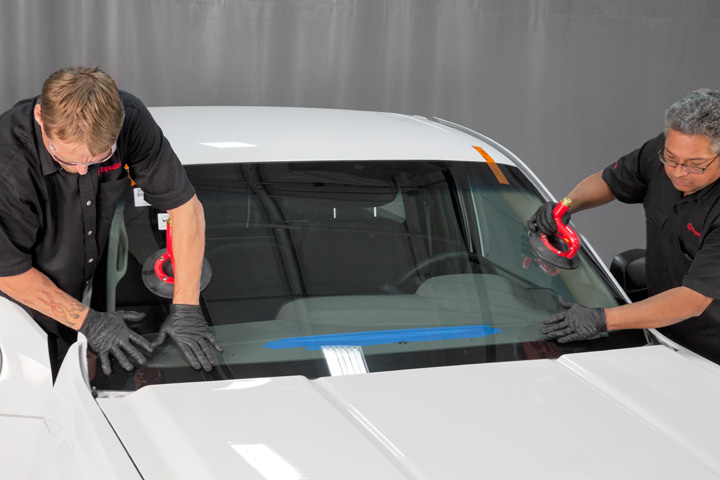
I-CAR recognizes minimum driveaway time for urethane adhesive. This is a time specification that the glass industry has agreed on when a vehicle that has had a stationary glass replacement can be released to the customer. It is when the adhesive has achieved enough strength to pass Federal Motor Vehicle Safety Standards (FMVSS) 212, windshield retention, and 208, occupant protection.

Minimum driveaway time may be as little as 30-60 minutes for fast-cure products, and 2-8 hours or longer for conventional moisture-cured products. The shortest driveaway time for moisture-cured products is based on 75°F and 50% relative humidity. Lower temperature and/or humidity requires a longer time. The time will be specified on the performance data sheet that comes with the product.

Glass urethane may take 24 hours to reach full strength and longer for full cure. Some vehicle makers have specific recommendations regarding stationary glass installation. For example, FCA/Stellantis states 24 hours. Ford/Lincoln states to not release the vehicle until full cure has been achieved. Full cure time will also be specified on the performance data sheet that comes with the product.

This is why it is important to install stationary glass as early in the repair process as possible. Information regarding minimum driveaway time and full cure time should be communicated to the vehicle owner.


Related I-CAR Courses


Article validated in 2024

  • App-Based Connected Services Considerations: Toyota/Lexus Thursday, 15 January 2026

    Have you had the experience where the vehicle notified the owner that it was being moved while it was in your repair facility? App-based connected services are available from many vehicle makers and may...

  • Digital Key Considerations: Toyota/Lexus Thursday, 15 January 2026

    The intermingling of technology and automobiles continues, with digital key offerings from most vehicle makers. Digital keys utilize smartphone technology to expand vehicle access and owner...

  • Nissan/INFINITI Position Statements: Advanced Driver Assistance System Components Thursday, 8 January 2026

    Nissan/INFINITI released position statements on the use of salvaged, aftermarket, and "secondary-market" advanced driver assistance systems (ADAS) components.

  • I-CAR Repairers Realm: RTS 2025 Year In Review - Now Available Tuesday, 6 January 2026

    I-CAR had a discussion on the Repairability Technical Support (RTS) 2025 year in review.

  • Ford On Target 2025: Volume 4 Monday, 5 January 2026

    Ford has released the fourth installment of their On Target publication for 2025.

  • Structural Sectioning Procedures: Ford/Lincoln - UPDATE Friday, 19 December 2025

    Ask I-CAR receives many technical inquiries referring to sectioning. The collision repair industry wants to know where can you section, does the OEM have a sectioning procedure, and where can I find the...

  • Body Repair Manual Symbols: Hyundai Wednesday, 17 December 2025

    While looking at repair procedures in a body repair manual (BRM) you may notice that symbols are used to indicate specific operations or parts to be used during the repair process. Most BRMs provide a...

  • Body Repair Manual Symbols: Genesis Wednesday, 17 December 2025

    While looking at repair procedures in a body repair manual (BRM) you may notice that symbols are used to indicate specific operations or parts to be used during the repair process. Most BRMs provide a...

  • App-Based Connected Services Considerations: BMW Wednesday, 10 December 2025

    Have you had an experience where the vehicle notified the owner that it was being moved while it was in your repair facility? App-based connected services are available from many vehicle makers and...

  • Digital Key Considerations: BMW Wednesday, 10 December 2025

    The intermingling of technology and automobiles continues, with digital key offerings from most vehicle makers. Digital keys utilize smartphone technology to expand vehicle access and owner...