Close
|
|


|
|

Follow us on 
@Ask_ICAR for daily updates.
Your job requires that you keep on top of the latest in vehicle, tool, and equipment technology – I-CAR is committed to helping you do so in one convenient place. We regularly publish new articles highlighting the latest and greatest collision repair information.
So check back often and follow us on X @Ask_ICAR to ensure you’re equipped with the most up-to-date collision repair technical information available in the industry.
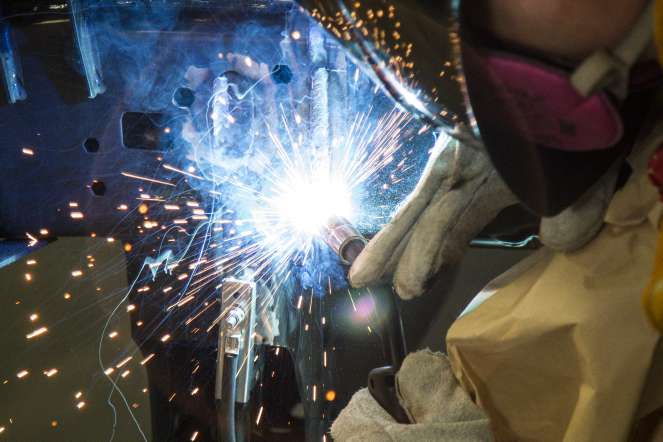
When determining repair vs. replace options for damaged cab-mounting areas, determine if the vehicle maker providesa service part and written replacement procedures. If there is no replacement procedure, but the service part is available, duplicate the original factory attachment method. If the part is not available as a separate service part, replacement of a major part of the frame, or the entire frame, may be the only option (See Figure 1).
Subaru has been growing in market share over the past few years. With more and more Subarus on the road everyday, what is the collision repair industry going to do about repairing these vehicles that are being seen with more regularity?
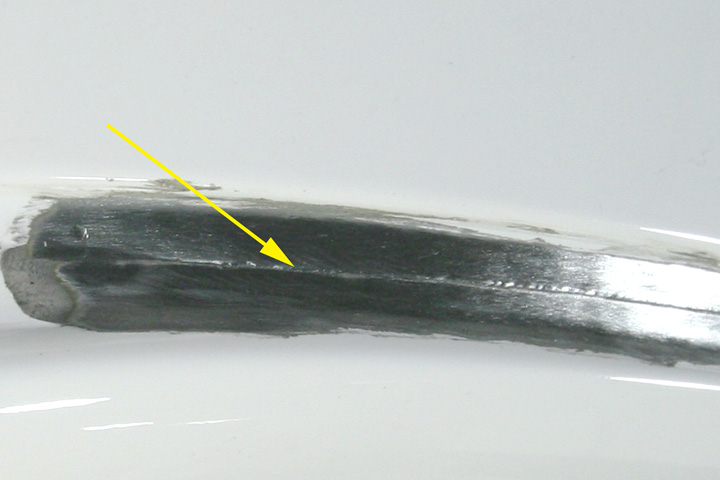
The roof panel on the 2013 Nissan 370Z is laser-welded along the roof-to-side panel mating flange from the factory. Through a routine technical inquiry from a collision repair facility, the I-CAR Repairability Technical Support team was asked if a Nissan procedure existed for replacing the roof panel.
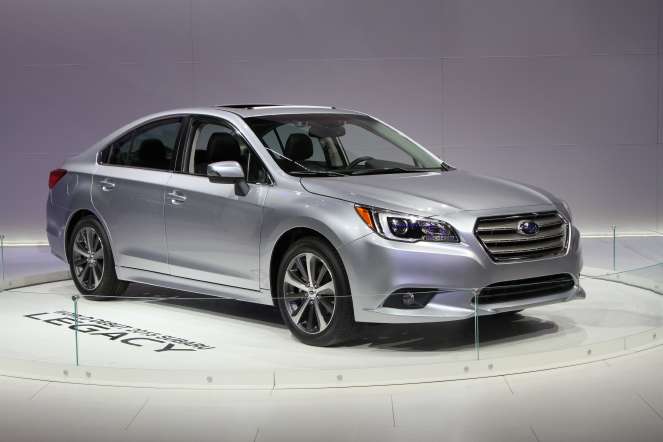
As part of the I-CAR Repairability Technical Support (RTS) initiative's OEM linking pin activity, we are helping to connect the collision repair industry to the vehicle makers. Recently we had a technical inquiry that asked, "Do you have to replace a front passenger airbag on a Subaru even if only the driver's airbag deployed? The repair information seems to indicate that it should."
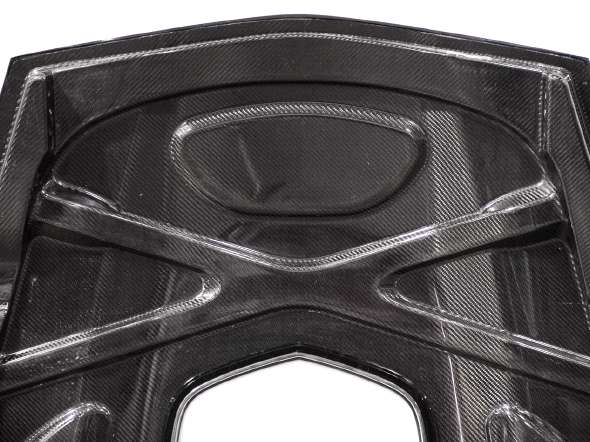
Carbon fiber is being used on many late-model vehicles and has become a buzzword in the industry. This article answers some questions you may have been wondering about on the use and repair of carbon fiber.
Beginning model year 2014, Mazda has introduced a regenerative engine braking system called i-ELOOP, short for "Intelligent Energy Loop." In this system, a capacitor is used to store electrical energy generated during deceleration. In a conventional system when the vehicle slows or stops, energy is wasted. The i-ELOOP system uses a unique variable voltage alternator that can produce up to 25 volts during deceleration. The electricity that is generated during deceleration is not sent directly to the vehicle's battery, because the battery cannot store more than 12 volts. Instead, the capacitor stores the electricity, up to the 25 volts produced by the alternator. The capacitor then readily discharges it through a voltage reduction circuit to power vehicle accessories.

by Jason Bartanen
We've seen a lot of changes in vehicle technology over the years. With each of these changes come new challenges and new opportunities. When the unibody vehicle was introduced, repair professionals were required to change their approach to collision repair, from damage analysis through the repair process. With the introduction of GMA (MIG) welding, additional requirements for repairs included new training and equipment. And passive restraints systems presented a completely different type of challenge, involving electronics and diagnostics.
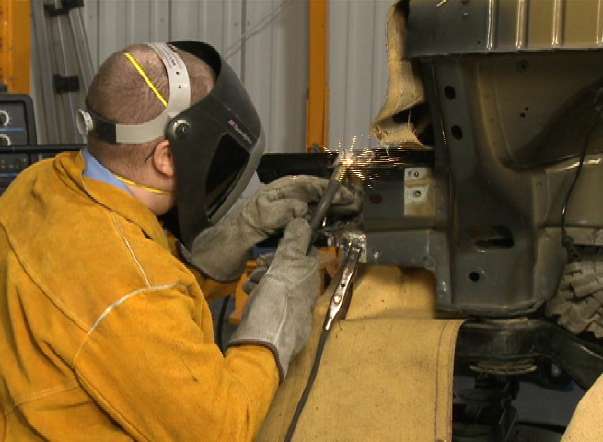
To help the industry be better prepared for repairing new vehicles, I-CAR has updated the Training and Certification: Steel Sectioning. With the changes to vehicles happening daily from new materials, thinner materials, new technologies, and new repair procedures, collision repair technicians have had to update their skills to repair the new vehicles.
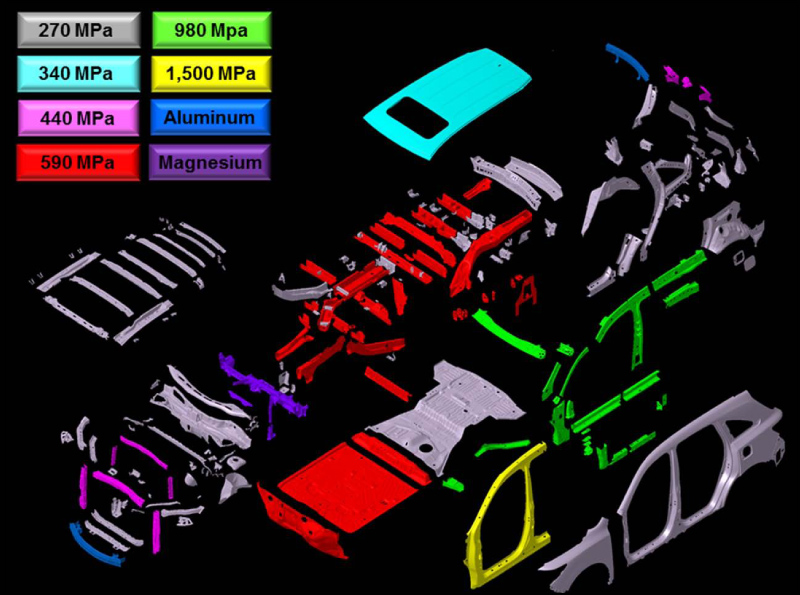
A new free publication from Honda features body repair information on their new models. The first two editions of Body Repair News are now available on Honda's Service Express website. The premier publication in the series focuses on new model body repair information for the 2014 Acura MDX and the second edition covers the 2013 Honda Accord. Subsequent Body Repair News editions will be created, or updated, for each new model and any minor model change where significant body design changes are made.
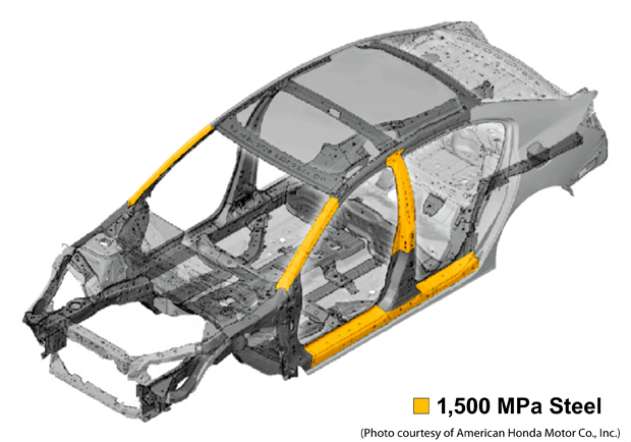
If you haven't been exposed to MIG brazing yet, it's likely that you will be in the not-too-distant future. More and more popular vehicles are requiring MIG brazing for attaching certain high-strength steel (HSS) parts when making collision repairs. An example of this is on the 2013 Honda Accord.
The Occupational Safety and Health Administration (OSHA) is requiring that all employees be trained, by December 1st of 2013, on the revision to its Hazard Communication Standard. The revision to the 1994 standard more closely aligns with the Globally Harmonized System (GHS), an international approach to labeling and classifying hazardous products.
If there is a sectioning procedure on a front lower rail, GMA welding across a seam is the usual method for attaching the new joint. On at least two late model Porsche vehicles, however, there is a front lower rail sectioning procedure that uses no welds at all. The rails on the Panamera, since 2010, and the 911, since 2012, both have aluminum construction.
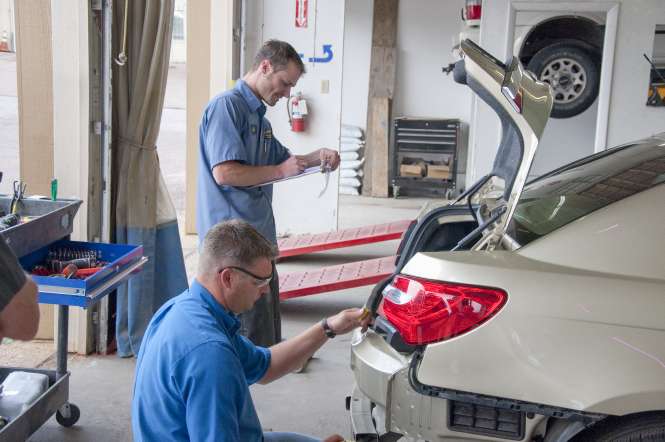
Blueprinting is a term often heard in the collision repair industry. Blueprinting means different things to different people, but blueprinting really is establishing a standard operating procedure (SOP) that allows for the discovery of all the damage before repairs begin. As part of the blueprinting process, all the parts should be identified right down to the blend panels and the clips that are needed. The correct repair information should be found along with any color matching that needs to be done. Following these steps and others, before repairs begin, will eliminate the problems that arise from finding additional damage during the repair process, which can interrupt and delay the repairs on that vehicle. Worse yet, is when the vehicle is repaired incorrectly because vehicle maker repair procedures were not followed.
One of the biggest challenges to implementing the blueprinting process may be the staff's perception of what will be involved. To be successful, those perceptions must be changed.
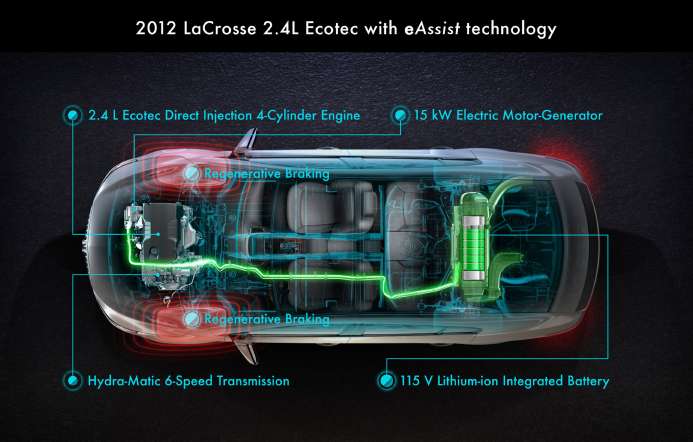
Another version of electric-assist vehicle technology is showing up in collision repair facilities. General Motors in 2012 introduced what it refers to as "light electrification" technology on select models. This system is called eAssist, and is available on some 2012 Buick LaCrosse, Regal, and 2013 Chevrolet Malibu models (see Figure 1).
As the industry continues to ask if pre- and post-repair system scanning is necessary, Toyota/Lexus/Scion provides their answer.
Are you wondering if a particular OEM or organization has a published statement on pre-repair and post-repair scanning? We have compiled a list of most of the statements on the subject, so you can...
Since advanced driver assistance systems (ADAS), scanning, and calibration first started becoming relevant, members of the collision repair industry have required as much knowledge as possible on...
BMW has released a position statement related to pre- and post-repair system scanning. The statement applies to All vehicles equipped with on board diagnostics II (OBD II).
Honda /Acura has updated their position statement on pre- and post-repair scanning to give more clarification on what is expected for scanning.
The I-CAR best practice article, Recycled Outer Quarter Panels w/Rolled Hem Flanges has gotten a lot of interest from the collision repair industry. It’s important to know which vehicles are...
As the industry continues to ask, are pre- and post-repair scans necessary, General Motors provides their answer.
Over the past few months, we've been sharing OEM position statements on restraints wiring repairs. Now we're bringing them all together in one place for easy reference.
Technicians should be aware of what’s required to keep advanced driver assistance systems (ADAS) running safely after a collision. Whether that be aiming a camera, which can cause a system to not...
FCA/Stellantis has released a position statement related to pre- and post-repair system scanning.
Sometimes seeing is understanding, that’s why I-CAR's technical team created the Just in Time video series to guide you through a variety of collision repair topics from ADAS and EVs to repair tips...
I-CAR is having a discussion on Ford advanced driver assistance systems (ADAS) considerations.
General Motors (GM) has a position statement pertaining to trailer hitch repair.
Sometimes seeing is understanding, that’s why I-CAR's technical team created the Just in Time video series to guide you through a variety of collision repair topics from ADAS and EVs to repair tips...
As part of the I-CAR Repairability Technical Support (RTS) OEM linking pin activity, we are helping to connect the collision repair industry to the vehicle makers. We received technical inquiries...
Mazda, as with many other OEMs, has issued a pre- and post-repair scanning position statement. Let’s take a look at this position statement.
If you can’t find sectioning procedures for the part, that means you can’t section it, right? The question is more complex than that. Let’s take a closer look at the subject.
Honda released a Body Repair News bulletin for the 2026 Honda Prelude.
I-CAR had a discussion on the growing issue of counterfeit OEM repair and service parts.
Repairer Driven News (RDN) has published an article highlighting the General Motors (GM) restriction on parts for the front frame rail of battery electric vehicles (BEVs).