








 Print
Print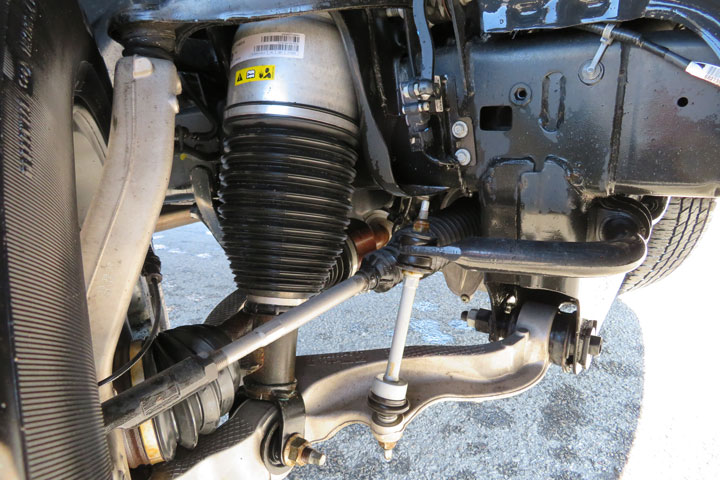
In this series, we look at several methods used to boost fuel economy, different considerations to repair them, and any special precautions the collision repair industry needs to know. Let’s check out active suspension.
Tightening regulations on fuel economy along with rising awareness about pollution have influenced vehicle design and function in recent years. However, most consumers are not willing to sacrifice comfort, vehicle size, or power, so auto makers needed to use different methods to boost fuel economy. For the most part, aerodynamics can be directly related to fuel efficiency. The smoother air flows over the vehicle, the less power is required to make the vehicle move, leading to higher fuel economy. Unfortunately, a vehicle that has excellent aerodynamics may not be a functional vehicle for everyday consumers. So, other measures needed to be taken.
Active suspension lowers the vehicle in order to achieve better fuel efficiency through aerodynamics. The suspension can either lower automatically when the vehicle reaches a certain speed, or It can also be lowered manually. These systems are equipped with height sensors and may need to be calibrated when replaced if specified in the service manual.
Most systems keep a reservoir with a compressor to transfer compressed air from shock to shock to level, lower, and raise the vehicle. The air then goes back to the reservoir where it can be stored until it is needed again, allowing the system to recycle its compressed air. Before servicing or replacing the active suspension system, consult the service information to research how to deactivate and decompress the system. Some manufacturers may require the use of a scan tool and/or special tool to deactivate the system.
Always research repair procedures to make sure that all repairs are being performed according to the manufacturer. If these systems are not properly functioning after a collision, the vehicles fuel economy may be sacrificed, which leads to an unsatisfied customer. Though this system may not pose a safety concern, it can cause a problem with fuel efficiency, emissions, and customer satisfaction.
Additional I-CAR Collision Repair News you may find helpful:
Related I-CAR Courses
Article validated in 2026