Close
|
|


|
|





Follow us on 
@Ask_ICAR for daily updates.
Your job requires that you keep on top of the latest in vehicle, tool, and equipment technology – I-CAR is committed to helping you do so in one convenient place. We regularly publish new articles highlighting the latest and greatest collision repair information.
So check back often and follow us on X @Ask_ICAR to ensure you’re equipped with the most up-to-date collision repair technical information available in the industry.
Navigating OEM websites can be challenging when searching for collision repair procedures, especially as no two OEM websites are alike. What happens when you need to find other types of repair information, such as, "What needs to be inspected after a supplemental restraints system (SRS) deployment", or "Does the tire pressure monitoring system (TPMS) require a scan tool or specialty tool?" Let's take a closer look at the BMW/Mini website.
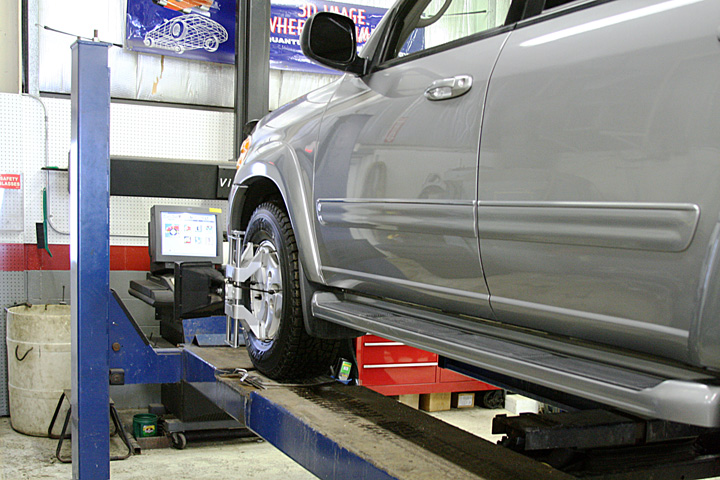
Wheel alignments are a common requirement on many collision damaged vehicles. Although the methods for measuring the alignment of the wheels can vary, the results should always be the same. The wheels should be aligned within OEM specifications.

As a collision repair technician, there is one part of a service manual that houses all of the information you would ever need…right? This is not the case with modern vehicles. You may be required to look in numerous manuals to find the information required to safely repair the vehicle.

In case you missed it, the National Automotive Technicians Education Foundation (NATEF) and the Automotive Youth Educational Systems (AYES) merged to become the ASE Education Foundation.
Repairer Driven News (RDN) released an article on the Rivian R1T electric truck and R1S electric SUV that are slated to be available summer 2021.
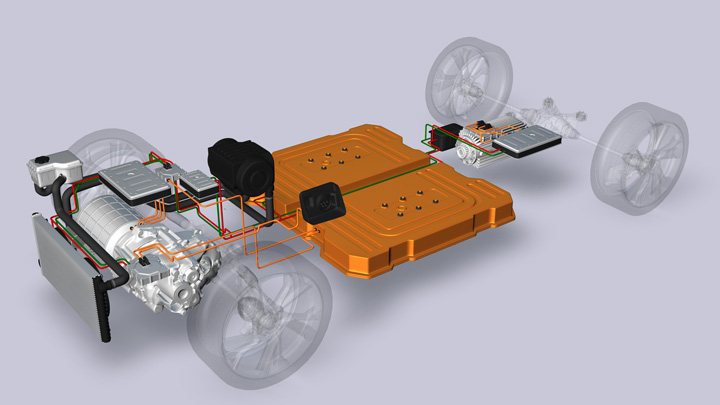
As more hybrid and electric vehicles appear on OEM sales and service information sites, it can be difficult to determine what type of vehicle it is. This is partly because there are so many names and terms used for the different powertrains out there. Despite all the different names, most people refer to all of these vehicles simply as an electric vehicle (EV). The RTS Team created this article to help you better understand the difference between the terms.
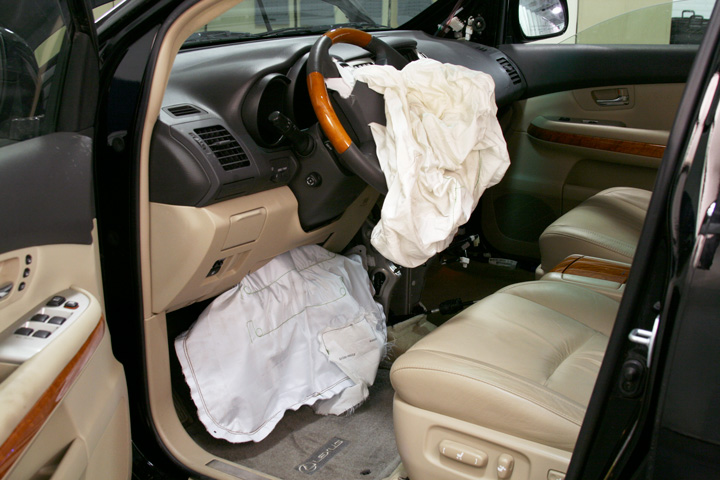
Supplemental restraints systems (SRS) are complex, sophisticated safety systems in today’s vehicles. Properly repairing SRS after a collision is crucial to the safety of the vehicle occupants.

As electric-only, hybrid, and fuel cell electric vehicles are increasing in sales, they are becoming more commonplace in repair facilities. Along with the unique powertrains that come with these vehicles, also comes unique safety concerns. Regardless of vehicle maker, high-voltage (HV) systems pose a threat of injury or death if not handled properly. Only personnel with the proper training, PPE, tools, equipment, and service information should perform work on the HV systems.

As electric-only, hybrid, and fuel cell electric vehicles are increasing in sales, they are becoming more commonplace in repair facilities. Along with the unique powertrains that come with these vehicles, also comes unique safety concerns. Regardless of vehicle maker, high-voltage (HV) systems pose a threat of injury or death if not handled properly. Only personnel with the proper training, PPE, tools, equipment, and service information should perform work on the HV systems.
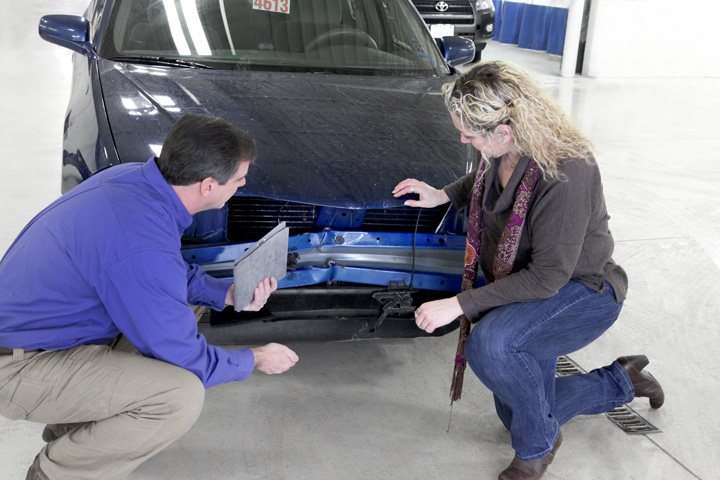
by Lyle Van Voorst, I-CAR Instructor
When a potential customer enters a repair facility, they are usually focused on what comes next with having their vehicle repaired. Just like when you go to a doctor’s office, you’re there for a medical concern and not for a social visit. Similarly, a visit to a repair facility can have an emotional effect on the customer. From the receptionist to the estimator, how one approaches the customer is essential. This makes the first impression and level of professionalism so important. The customer’s number one concern is getting their vehicle repaired. The estimator’s number one priority is taking care of the customer.
Service information sites are the standard on accessing repair and other vehicle information. Often these websites make minor upgrades or changes to navigating or otherwise using the site, but typically nothing that changes the information available on a particular vehicle.
However, on occasion, a service information website adds a feature that makes a difference in information available for the late-model vehicle being researched. Let’s take a look at the filtering features on the Ford/Lincoln website.
I-CAR has released a course which covers identifying damage to advanced driver assistance systems (ADAS) sensor mounting locations.
Did you know that many OEMs specify nugget size for spot and plug welds? This information is typically found within vehicle-specific repair procedures or can be found under general welding guidelines. Let’s see what Audi has to say.
Did you know that some OEMs specify nugget size for spot and plug welds? This information is typically found within vehicle-specific repair procedures or can be found under general welding guidelines. Let’s see what Volkswagen has to say.

A spring edition of the General Motors (GM) Repair Insights magazine is now available. This issue highlights the all-new 2021 Buick Envision’s technology, performance, and safety.
As the industry continues to ask if pre- and post-repair system scanning is necessary, Toyota/Lexus/Scion provides their answer.
Are you wondering if a particular OEM or organization has a published statement on pre-repair and post-repair scanning? We have compiled a list of most of the statements on the subject, so you can...
Since advanced driver assistance systems (ADAS), scanning, and calibration first started becoming relevant, members of the collision repair industry have required as much knowledge as possible on...
BMW has released a position statement related to pre- and post-repair system scanning. The statement applies to All vehicles equipped with on board diagnostics II (OBD II).
Honda /Acura has updated their position statement on pre- and post-repair scanning to give more clarification on what is expected for scanning.
The I-CAR best practice article, Recycled Outer Quarter Panels w/Rolled Hem Flanges has gotten a lot of interest from the collision repair industry. It’s important to know which vehicles are...
As the industry continues to ask, are pre- and post-repair scans necessary, General Motors provides their answer.
Over the past few months, we've been sharing OEM position statements on restraints wiring repairs. Now we're bringing them all together in one place for easy reference.
Technicians should be aware of what’s required to keep advanced driver assistance systems (ADAS) running safely after a collision. Whether that be aiming a camera, which can cause a system to not...
FCA/Stellantis has released a position statement related to pre- and post-repair system scanning.
General Motors (GM) has a position statement pertaining to trailer hitch repair.
Sometimes seeing is understanding, that’s why I-CAR's technical team created the Just in Time video series to guide you through a variety of collision repair topics from ADAS and EVs to repair tips...
As part of the I-CAR Repairability Technical Support (RTS) OEM linking pin activity, we are helping to connect the collision repair industry to the vehicle makers. We received technical inquiries...
Mazda, as with many other OEMs, has issued a pre- and post-repair scanning position statement. Let’s take a look at this position statement.
If you can’t find sectioning procedures for the part, that means you can’t section it, right? The question is more complex than that. Let’s take a closer look at the subject.
Honda released a Body Repair News bulletin for the 2026 Honda Prelude.
I-CAR had a discussion on the growing issue of counterfeit OEM repair and service parts.
Repairer Driven News (RDN) has published an article highlighting the General Motors (GM) restriction on parts for the front frame rail of battery electric vehicles (BEVs).
We are often asked, "What do I do if there isn’t a procedure to replace a service part?" Let’s see what Nissan/INFINITI says.
While looking at repair procedures in a body repair manual (BRM) you may notice that symbols are used to indicate specific operations or parts to be used during the repair process. Most BRMs provide a...