Close
|
|


|
|




Follow us on 
@Ask_ICAR for daily updates.
Your job requires that you keep on top of the latest in vehicle, tool, and equipment technology – I-CAR is committed to helping you do so in one convenient place. We regularly publish new articles highlighting the latest and greatest collision repair information.
So check back often and follow us on X @Ask_ICAR to ensure you’re equipped with the most up-to-date collision repair technical information available in the industry.
Ask I-CAR receives many technical inquiries referring to sectioning. The collision repair industry wants to know where can you section, does the OEM have a sectioning procedure, and where can I find the sectioning procedure? Most OEMs allow sectioning to outer body panels and the front and rear rails. Sectioning reinforcements is not as common, as most reinforcements are replaced at factory seams.
Repairer Driven News (RDN) released an article highlighting Toyota's list of best practices while repairing EVs.

What is a non-SRS wiring repair? It is the repairing of an electrical component that is not part of the supplemental restraints system circuit (usually identified by yellow wire looms). As technology increases on vehicles, so does the number of components that utilize electricity. Many of the sensors and modules are becoming smarter and more sensitive. If the wire is too long, the wrong gauge, or spliced in the wrong location, it can cause malfunctions in the components that it’s powering. Many OEMs have different restrictions and guidelines for repairing wiring that does not control SRS components. On the other hand, there are OEMs that don’t allow wiring repairs at all, so full harness replacement is the only option.
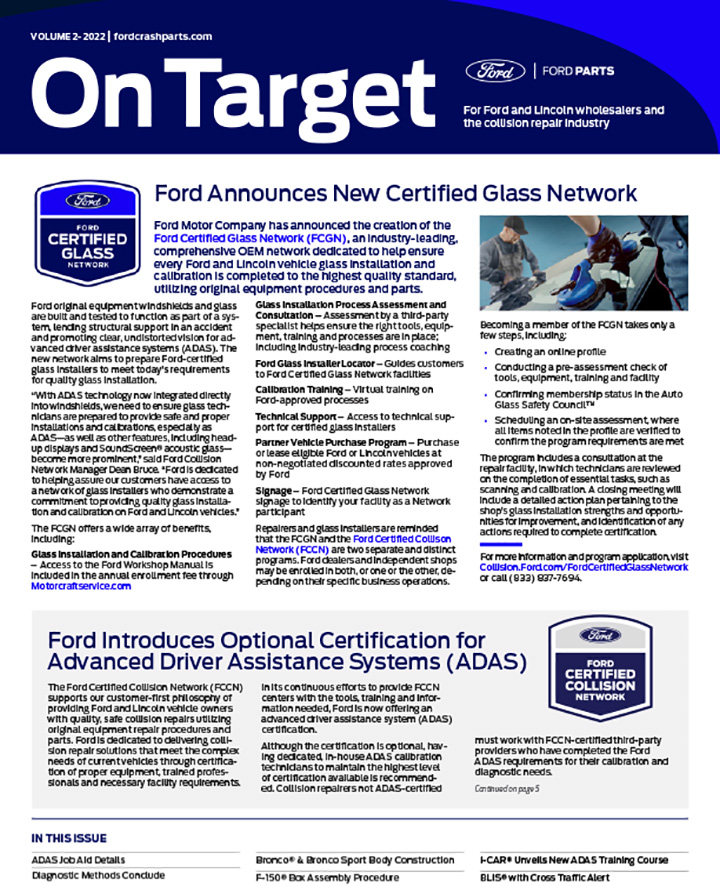
Ford has released the second installment of their On Target publication for 2022.
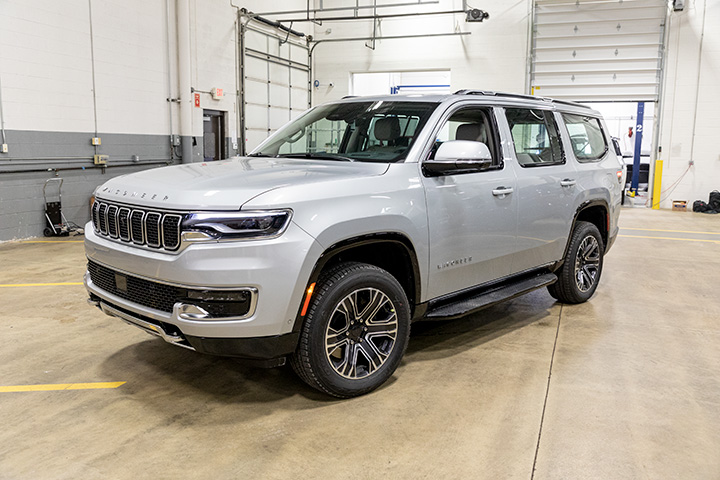
With the release of the Wagoneer and the Grand Wagoneer WS, I-CAR has developed a course that overviews several features on the vehicles as well as repairability.
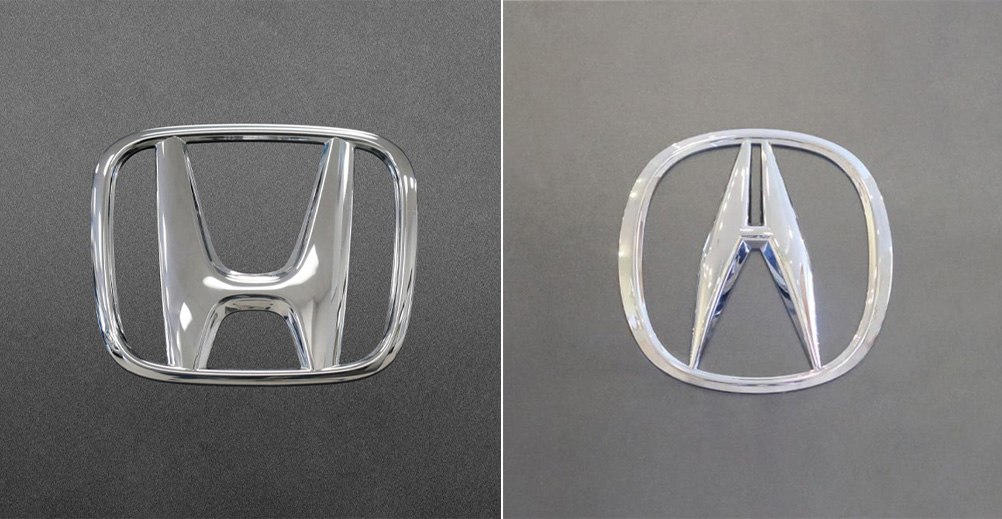
A key factor in collision repair is making long-lasting repairs. When a vehicle is repaired, many areas of corrosion protection are disturbed. This creates corrosion hot spots that left untreated will lead to corrosion and potentially a repair failure. However, there are certain precautions that can be taken to safely and properly restore the corrosion protection, throughout the repair process. OEMs often give specifications on restoring corrosion protection. These specifications generally include seam sealer, adhesives, foam fillers, and cavity waxes. Let's take a look at what Honda/Acura says.
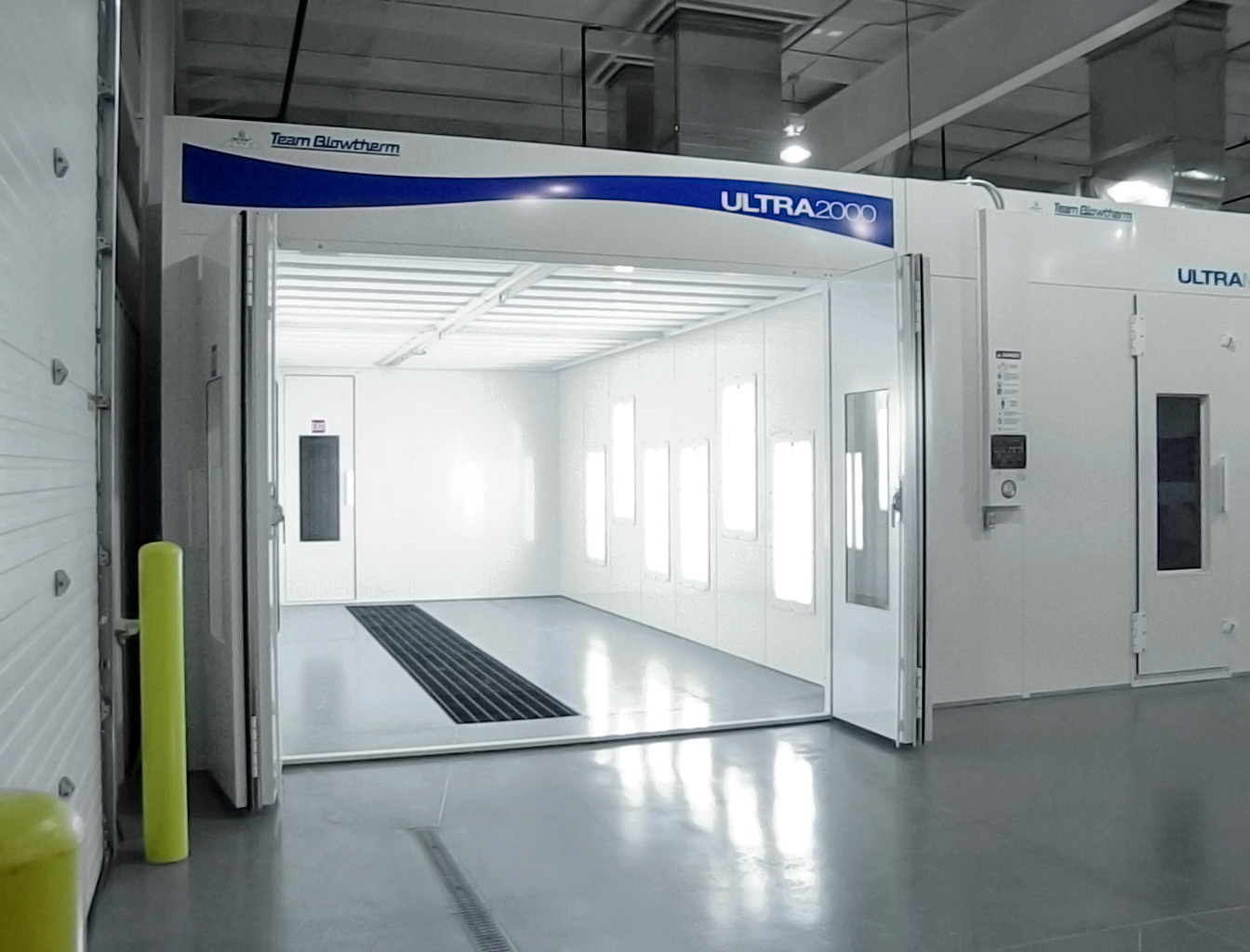
Sometimes, going back to the basics can make the difference between a quality repair and a failed repair. Some refinishing defects are controllable. However, refinishing defects that are influenced by the environment may not be controlled. Let’s take a look at environmental impacts on both solvent-borne and waterborne refinishing processes, like temperature and humidity.
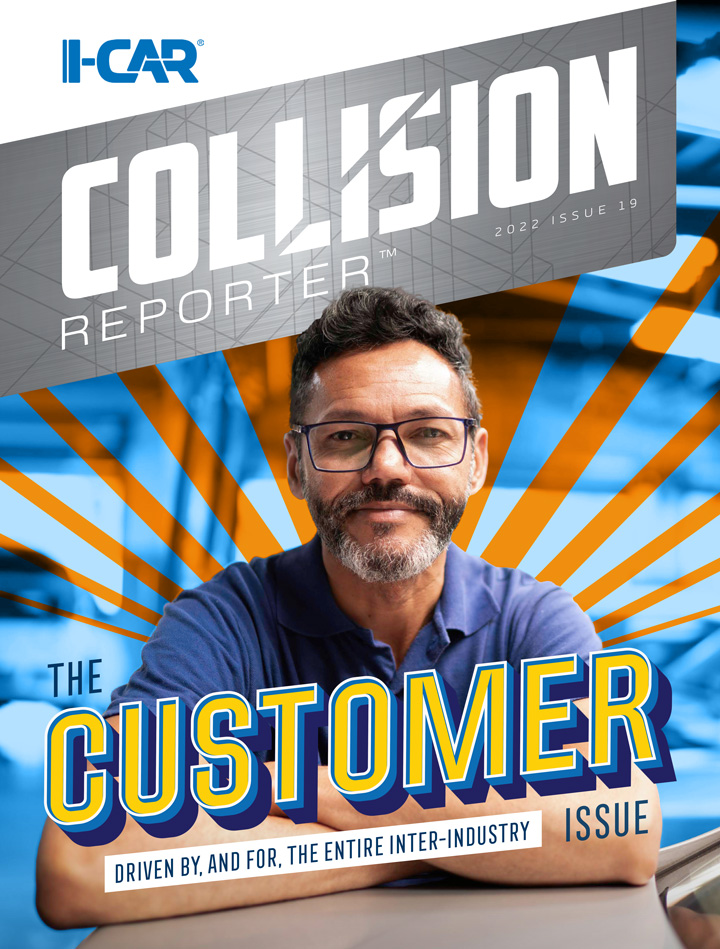
The nineteenth installment of the I-CAR Collision Reporter - The Customer Issue has been released. This issue focuses on the many customers of the entire inter-industry which I-CAR serves.
I-CAR continues a three-part series with a discussion with industry experts on plastic repair.
Per your requests, we are adding step-by-step instructions on how to access the vehicle maker service repair information to complement our how-to-videos on the OEM Information pages. Easily reference this article by clicking the link under the video on the Genesis OEM Information page.
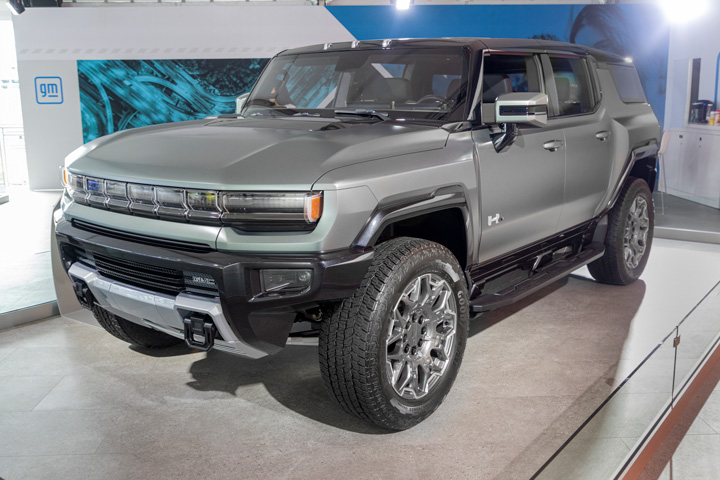
With the release of the Hummer EV, I-CAR has developed a course that overviews several features on the vehicle as well as repairability.
A key factor in collision repair is making long-lasting repairs. When a vehicle is repaired, many areas of corrosion protection are disturbed. This creates corrosion hot spots that left untreated will lead to corrosion and potentially a repair failure. However, there are certain precautions that can be taken to safely and properly restore the corrosion protection, throughout the repair process. OEMs often give specifications on restoring corrosion protection. These specifications generally include seam sealers, adhesives, foam fillers, and cavity waxes. Let's take a look at what Tesla says.
The 2022 SkillsUSA National Leadership and Skills Conference took place on June 23, 2022. Every year I-CAR sends volunteers (virtually in 2021) to judge the collision repair technology competition. Let’s take a look at this year’s results.
Weld-through primers are generally a zinc-based product that are applied to the mating surfaces prior to welding. Corroding zinc forms zinc oxide which protects the steel. This is called sacrificial corrosion. For a quality weld to be made it’s required that the weld-through primer be removed from the direct weld zone before welding the joint when GMA welding. Many OEMs have a position on when and how to use weld-through primer or when it shouldn’t be utilized. Let’s see what Tesla recommends and where this information can be found.
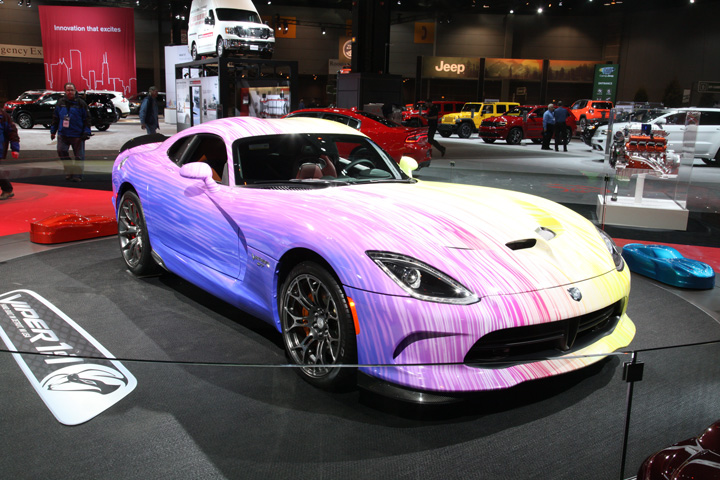
Vinyl wraps and paint protection film (PPF) are becoming increasingly popular. These products are going to influence the overall repair planning and process. Let’s take a look at some considerations when creating a repair plan.
As the industry continues to ask if pre- and post-repair system scanning is necessary, Toyota/Lexus/Scion provides their answer.
Are you wondering if a particular OEM or organization has a published statement on pre-repair and post-repair scanning? We have compiled a list of most of the statements on the subject, so you can...
Since advanced driver assistance systems (ADAS), scanning, and calibration first started becoming relevant, members of the collision repair industry have required as much knowledge as possible on...
BMW has released a position statement related to pre- and post-repair system scanning. The statement applies to All vehicles equipped with on board diagnostics II (OBD II).
Honda /Acura has updated their position statement on pre- and post-repair scanning to give more clarification on what is expected for scanning.
The I-CAR best practice article, Recycled Outer Quarter Panels w/Rolled Hem Flanges has gotten a lot of interest from the collision repair industry. It’s important to know which vehicles are...
As the industry continues to ask, are pre- and post-repair scans necessary, General Motors provides their answer.
Over the past few months, we've been sharing OEM position statements on restraints wiring repairs. Now we're bringing them all together in one place for easy reference.
Technicians should be aware of what’s required to keep advanced driver assistance systems (ADAS) running safely after a collision. Whether that be aiming a camera, which can cause a system to not...
FCA/Stellantis has released a position statement related to pre- and post-repair system scanning.
General Motors (GM) has a position statement pertaining to trailer hitch repair.
Sometimes seeing is understanding, that’s why I-CAR's technical team created the Just in Time video series to guide you through a variety of collision repair topics from ADAS and EVs to repair tips...
As part of the I-CAR Repairability Technical Support (RTS) OEM linking pin activity, we are helping to connect the collision repair industry to the vehicle makers. We received technical inquiries...
Mazda, as with many other OEMs, has issued a pre- and post-repair scanning position statement. Let’s take a look at this position statement.
If you can’t find sectioning procedures for the part, that means you can’t section it, right? The question is more complex than that. Let’s take a closer look at the subject.
Honda released a Body Repair News bulletin for the 2026 Honda Prelude.
I-CAR had a discussion on the growing issue of counterfeit OEM repair and service parts.
Repairer Driven News (RDN) has published an article highlighting the General Motors (GM) restriction on parts for the front frame rail of battery electric vehicles (BEVs).
We are often asked, "What do I do if there isn’t a procedure to replace a service part?" Let’s see what Nissan/INFINITI says.
While looking at repair procedures in a body repair manual (BRM) you may notice that symbols are used to indicate specific operations or parts to be used during the repair process. Most BRMs provide a...