Powertrain Overview: Compressed Natural Gas (CNG)

Since the creation of the first modern automobile nearly a century and a half ago, there has been one dominant engine option on the market, the gasoline internal combustion engine. Now the gasoline internal combustion engine has some challengers trying to steal the crown. There have been many different types of engines in the past but many of them relied solely on fossil fuels to operate.

Recently though, because of increasing fuel economy standards and emission awareness, a new breed of engines is emerging, many relying on electricity to aid in powering the vehicle. With these new power plants comes a new set of rules and warnings on how to repair them. A lot of collision technicians have an idea about how some of the new powertrains work, but not a full understanding of what is going on under the hood. It is important to understand the inner workings of the engine in order to safely and properly diagnose and repair them after a collision. In this series, we’ll walk you through many of the current engine options and how they convert the fuel they’re consuming into usable power. Let’s explore the compressed natural gas (CNG) internal combustion powertrain.

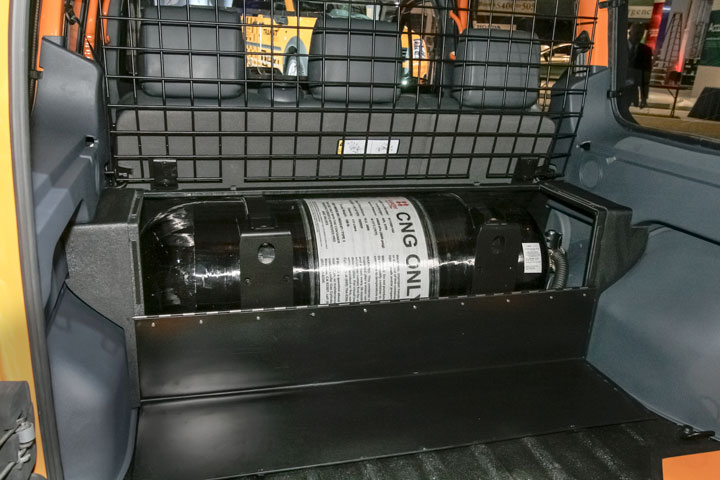
A CNG powertrain is nearly identical to a traditional gasoline internal combustion engine. There are a few different components to the CNG powertrain, but the way that the fuel is burned is the same. The fuel is mixed with air which is then burned in the cylinder, creating power. The tanks that fuel is stored in is different, CNG required a special tank that can hold highly compressed gas. The gas is under high pressure when it leaves the tank so it must pass through a pressure regulator to lower the pressure before it can be burned.

CNG engines have a significant amount of sensitive electrical components on them. These powertrains use a 12-volt battery system to start the vehicle and power the accessories. The battery is charged by an alternator powered by the engine. Because of this, it is crucial to disconnect and isolate the battery and electrical system when making repairs and welding on the vehicle. The added electrical current from welding can damage important electrical components for the engine. The high-pressure gas tanks and lines require special care when servicing. There normally are pressure releases built into tanks that may need inspection after collisions.

Additional I-CAR Collision Repair News you may find helpful:


Related I-CAR Courses


Article validated in 2024

  • Your 2025 Favorites: Top Articles Friday, 16 January 2026

    As 2026 rolls in, we can reflect back on what the previous year had to offer. Let's take a look at some of the collision industry information you've been most interested in from this past year....

  • App-Based Connected Services Considerations: Toyota/Lexus Thursday, 15 January 2026

    Have you had the experience where the vehicle notified the owner that it was being moved while it was in your repair facility? App-based connected services are available from many vehicle makers and may...

  • Digital Key Considerations: Toyota/Lexus Thursday, 15 January 2026

    The intermingling of technology and automobiles continues, with digital key offerings from most vehicle makers. Digital keys utilize smartphone technology to expand vehicle access and owner...

  • Nissan/INFINITI Position Statements: Advanced Driver Assistance System Components Thursday, 8 January 2026

    Nissan/INFINITI released position statements on the use of salvaged, aftermarket, and "secondary-market" advanced driver assistance systems (ADAS) components.

  • I-CAR Repairers Realm: RTS 2025 Year In Review - Now Available Tuesday, 6 January 2026

    I-CAR had a discussion on the Repairability Technical Support (RTS) 2025 year in review.

  • Ford On Target 2025: Volume 4 Monday, 5 January 2026

    Ford has released the fourth installment of their On Target publication for 2025.

  • Structural Sectioning Procedures: Ford/Lincoln - UPDATE Friday, 19 December 2025

    Ask I-CAR receives many technical inquiries referring to sectioning. The collision repair industry wants to know where can you section, does the OEM have a sectioning procedure, and where can I find the...

  • Body Repair Manual Symbols: Hyundai Wednesday, 17 December 2025

    While looking at repair procedures in a body repair manual (BRM) you may notice that symbols are used to indicate specific operations or parts to be used during the repair process. Most BRMs provide a...

  • Body Repair Manual Symbols: Genesis Wednesday, 17 December 2025

    While looking at repair procedures in a body repair manual (BRM) you may notice that symbols are used to indicate specific operations or parts to be used during the repair process. Most BRMs provide a...

  • App-Based Connected Services Considerations: BMW Wednesday, 10 December 2025

    Have you had an experience where the vehicle notified the owner that it was being moved while it was in your repair facility? App-based connected services are available from many vehicle makers and...