Considerations For Dynamic Calibration

Dynamic calibrations are becoming increasingly more common for calibrating advanced driver assistance systems (ADAS). With dynamic calibrations comes a few considerations.

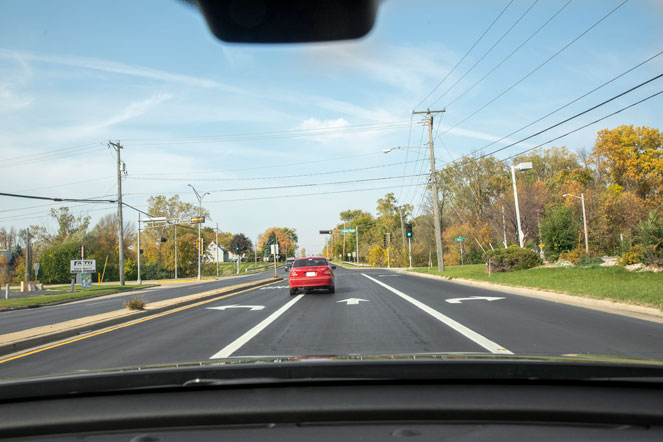
First of all, what is dynamic calibration? This is the process of driving the vehicle while connected to a scan tool. The sensors/cameras on the vehicle are then able to detect surroundings in order to electronically move themselves or possibly determine if it needs to be physically adjusted or leveled to see in the correct direction.

The sensor will then send a signal to the scan tool that it cannot see, and the scan tool then tells the technician to follow the on-screen instructions while the vehicle is being driven in order to adjust or calibrate the sensors/cameras. Some considerations for dynamic calibrations are:

  • Multiple technicians
    • It is not safe for a technician to drive and view a scan tool at the same time. Another technician should be in the vehicle to read off instructions and operate the scan tool.
  • Access to service information
    • The repair manual instructions may also be needed for specific vehicle and driving instructions, like speed requirements, fuel level requirements, and road conditions needed.
    • You may need to take a mobile hot spot along with you on the test drive if the diagnostic software requires an internet connection.
  • Time allowance
    • Not all calibrations take the same amount of time. In some cases, the same calibration on two of the same year, make, and model can vary in time. There are a lot of factors, like weather and road conditions, that play into dynamic calibrations. These factors can change the time it takes for the sensors/cameras to calibrate.
  • Other resources
    • It may be helpful to look at other resources, like training material, courses, or the owner’s manual in order to better understand the dynamic calibration process and the function of the sensors or cameras.

Always follow OEM procedures, especially when it comes to calibrating ADAS, to ensure a complete, safe, and quality repair.

Additional I-CAR Collision Repair News you may find helpful:


Related I-CAR Courses

  • Your 2025 Favorites: Top Articles Friday, 16 January 2026

    As 2026 rolls in, we can reflect back on what the previous year had to offer. Let's take a look at some of the collision industry information you've been most interested in from this past year....

  • App-Based Connected Services Considerations: Toyota/Lexus Thursday, 15 January 2026

    Have you had the experience where the vehicle notified the owner that it was being moved while it was in your repair facility? App-based connected services are available from many vehicle makers and may...

  • Digital Key Considerations: Toyota/Lexus Thursday, 15 January 2026

    The intermingling of technology and automobiles continues, with digital key offerings from most vehicle makers. Digital keys utilize smartphone technology to expand vehicle access and owner...

  • Nissan/INFINITI Position Statements: Advanced Driver Assistance System Components Thursday, 8 January 2026

    Nissan/INFINITI released position statements on the use of salvaged, aftermarket, and "secondary-market" advanced driver assistance systems (ADAS) components.

  • I-CAR Repairers Realm: RTS 2025 Year In Review - Now Available Tuesday, 6 January 2026

    I-CAR had a discussion on the Repairability Technical Support (RTS) 2025 year in review.

  • Ford On Target 2025: Volume 4 Monday, 5 January 2026

    Ford has released the fourth installment of their On Target publication for 2025.

  • Structural Sectioning Procedures: Ford/Lincoln - UPDATE Friday, 19 December 2025

    Ask I-CAR receives many technical inquiries referring to sectioning. The collision repair industry wants to know where can you section, does the OEM have a sectioning procedure, and where can I find the...

  • Body Repair Manual Symbols: Hyundai Wednesday, 17 December 2025

    While looking at repair procedures in a body repair manual (BRM) you may notice that symbols are used to indicate specific operations or parts to be used during the repair process. Most BRMs provide a...

  • Body Repair Manual Symbols: Genesis Wednesday, 17 December 2025

    While looking at repair procedures in a body repair manual (BRM) you may notice that symbols are used to indicate specific operations or parts to be used during the repair process. Most BRMs provide a...

  • App-Based Connected Services Considerations: BMW Wednesday, 10 December 2025

    Have you had an experience where the vehicle notified the owner that it was being moved while it was in your repair facility? App-based connected services are available from many vehicle makers and...