








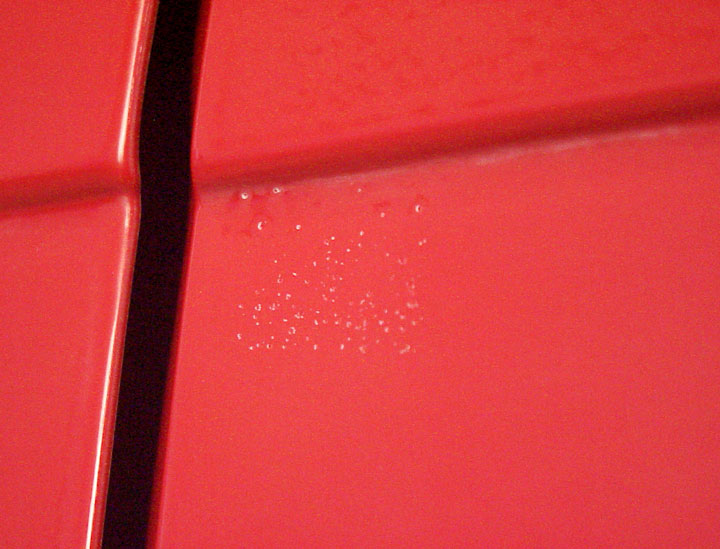
Back-To-Basics: Fisheyes

Sometimes, going back to the basics can make the difference between a quality repair and a failed repair. When it comes to spraying refinish materials, there are some common mistakes that can easily be avoided in order to prevent fisheyes.

Fisheyes are small crater-like openings in the refinish material. It is caused by a contaminated area on a panel that repels refinish materials. They typically appear in wet material and can be seen in one small spot or several areas. Some other things that can cause fisheyes are:

  • Silicone in the air, from a previous repair, on a towel, in the air lines, or in a car care product that was used on the vehicle (waxes, polishes, lubricants).
  • Oil or grease.
  • Contaminants introduced by technician (oily skin, grease from food).
  • Diesel motor exhaust gasses.

Before refinishing a vehicle or beginning repairs, look for signs of possible products like waxes or polishes being used, and clean the repair area with a product recommended by the paint maker. Oil can gather in air lines which can transfer on the panel being refinished and the air around the vehicle. Make sure air line filters are changed in order to keep oil from contaminating the air around and directly on the repair area itself. Avoid using products containing silicone near the repair area. Before sanding on a panel that might contain silicone product or other waxes, wash well with soap and water to make sure that residues are not being sanded and scratched into the repair area. Do not run diesel engines near the spray booth during the refinishing process, as this can also contaminate the refinish area. Lastly, make sure your hands are washed and that gloves are worn when repairing or refinishing in order to avoid oil transfer from your hands to the refinish area.

These are just a few examples on how fisheyes can occur, and how to avoid it. Always follow the paint maker instructions and standard operating procedures to ensure a complete, safe, and quality repair.


Related I-CAR Courses


Article validated in 2025

  • Your 2025 Favorites: Top Articles Friday, 16 January 2026

    As 2026 rolls in, we can reflect back on what the previous year had to offer. Let's take a look at some of the collision industry information you've been most interested in from this past year....

  • App-Based Connected Services Considerations: Toyota/Lexus Thursday, 15 January 2026

    Have you had the experience where the vehicle notified the owner that it was being moved while it was in your repair facility? App-based connected services are available from many vehicle makers and may...

  • Digital Key Considerations: Toyota/Lexus Thursday, 15 January 2026

    The intermingling of technology and automobiles continues, with digital key offerings from most vehicle makers. Digital keys utilize smartphone technology to expand vehicle access and owner...

  • Nissan/INFINITI Position Statements: Advanced Driver Assistance System Components Thursday, 8 January 2026

    Nissan/INFINITI released position statements on the use of salvaged, aftermarket, and "secondary-market" advanced driver assistance systems (ADAS) components.

  • I-CAR Repairers Realm: RTS 2025 Year In Review - Now Available Tuesday, 6 January 2026

    I-CAR had a discussion on the Repairability Technical Support (RTS) 2025 year in review.

  • Ford On Target 2025: Volume 4 Monday, 5 January 2026

    Ford has released the fourth installment of their On Target publication for 2025.

  • Structural Sectioning Procedures: Ford/Lincoln - UPDATE Friday, 19 December 2025

    Ask I-CAR receives many technical inquiries referring to sectioning. The collision repair industry wants to know where can you section, does the OEM have a sectioning procedure, and where can I find the...

  • Body Repair Manual Symbols: Hyundai Wednesday, 17 December 2025

    While looking at repair procedures in a body repair manual (BRM) you may notice that symbols are used to indicate specific operations or parts to be used during the repair process. Most BRMs provide a...

  • Body Repair Manual Symbols: Genesis Wednesday, 17 December 2025

    While looking at repair procedures in a body repair manual (BRM) you may notice that symbols are used to indicate specific operations or parts to be used during the repair process. Most BRMs provide a...

  • App-Based Connected Services Considerations: BMW Wednesday, 10 December 2025

    Have you had an experience where the vehicle notified the owner that it was being moved while it was in your repair facility? App-based connected services are available from many vehicle makers and...