
 Print
Print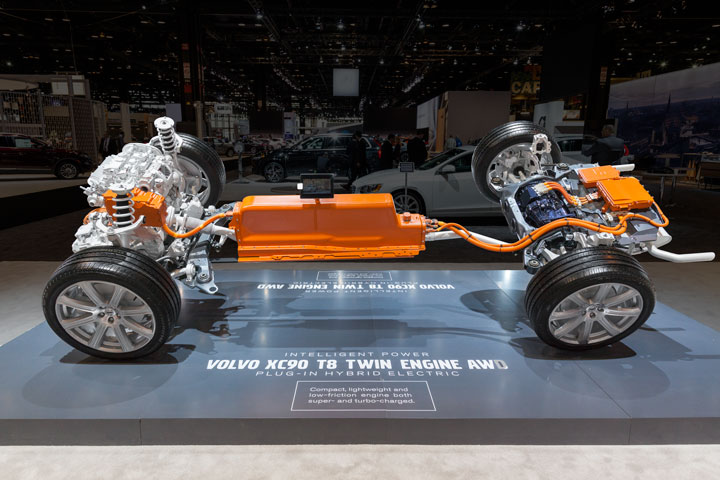
Since the creation of the first modern automobile nearly a century and a half ago, there has been one dominant engine option on the market, the gasoline internal combustion engine. Now the gasoline internal combustion engine has some challengers trying to steal the crown. There have been many different types of engines in the past but many of them relied solely on fossil fuels to operate.
Recently because of increasing fuel economy standards and emission awareness, a new breed of engines is emerging, many relying on electricity to aid in powering the vehicle. With these new power plants comes a new set of rules and warnings on how to repair them. A lot of collision technicians have an idea about how some of the new powertrains work, but not a full understanding of what is going on under the hood. It is important to understand the inner workings of the engine in order to safely and properly diagnose and repair them after a collision. In this series, we’ll walk you through many of the current engine options and how they convert the fuel they’re consuming into usable power. Let’s explore the plug-in hybrid electric vehicle (PHEV) powertrain.
PHEV operate very similar to traditional hybrid vehicles. The major difference is the addition of a larger higher capacity battery. This battery is meant to be primarily charged by plugging the vehicle into an outlet of charging station. PHEV powertrains still utilize a gasoline internal combustion engine, however the way the power is used is very different. Also, a PHEV adds an electric powertrain to the vehicle. A PHEV operates on pure electric power until the battery is fully depleted. Then the vehicle runs on the internal combustion engine and can operate as a traditional hybrid electric vehicle or the internal combustion engine may simply charge the high-voltage (HV) battery and not provide power to the wheels.
These vehicles have a 12 V battery to run accessories and an HV battery to run the electric motor. Due to the high-voltage it is extremely important to properly disable the battery before service is performed. The HV battery can cause serious injury or death if not handled properly. Make sure to consult the service information for proper disable procedure. Also, the 12 V battery needs to be disconnected and isolated when welding is performed so that damage does not occur. Hybrid systems normally have their own separate cooling system typically with a special coolant. This needs to be serviced and filled separate from the gasoline engine cooling system. Finally, hybrid HVAC systems require special parts and fluids. Normally an insulated coolant storage tank is utilized to hold hot coolant to heat the passenger compartment when the gasoline engine is not running. Also, the air conditioner compressor may be electric so the AC works when the gasoline engine is off, this requires a special oil when being serviced.
Additional I-CAR Collision Repair News you may find helpful:
Related I-CAR Courses
Article validated in 2024