Close
|
|


|
|


Follow us on 
@Ask_ICAR for daily updates.
Your job requires that you keep on top of the latest in vehicle, tool, and equipment technology – I-CAR is committed to helping you do so in one convenient place. We regularly publish new articles highlighting the latest and greatest collision repair information.
So check back often and follow us on X @Ask_ICAR to ensure you’re equipped with the most up-to-date collision repair technical information available in the industry.
Looking for more information about a specific repair procedure? Some OEMs are now providing videos within the repair procedures on their service site. Vehicle makers may also have additional websites that contain repair videos. As we research OEM websites and find these helpful videos, we will write articles to let you know. Let’s take a closer look at Honda/Acura.
A question often asked of the Repairability Technical Support (RTS) team is, "Can heat be used to straighten?" Several OEMs provide steel repairability matrices that provide heating times and temperature limits based on the type of metal being repaired, while other OEMs have restrictions on using heat at all. Let’s see what Ford/Lincoln has to say.
Repairer Driven News (RDN) released an article that focuses on rust under body filler. It discusses the reasons why rust can form under filler and offers solutions on how to prevent it from happening.
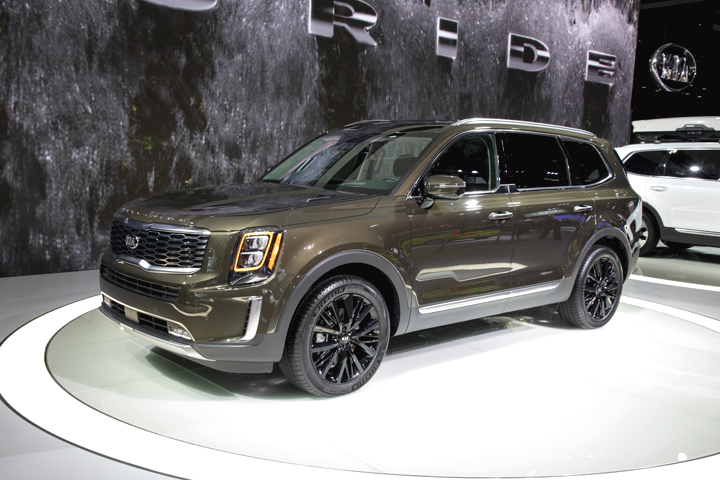
One of the top technical inquiries received at Ask I-CAR is, “Is there a sectioning or partial replacement procedure available?” To help answer this question, RTS has an OEM Partial Part Replacemet Search available. Here you will find information on if these procedures are available on a specific vehicle. Let’s take a closer look at the 2020 Kia Telluride.

While searching for information on advanced driver assistance systems (ADAS) on an OEM repair information site, you may come across unique calibration procedures or events. These events can vary by year and model, even within a particular make. As the RTS team has been researching these systems, we have been identifying these atypical circumstances. In order to help you better understand them, we are putting together a series of articles that help with the repair and calibration of ADAS. Let’s take a closer look at Toyota Safety Sense.
A question often asked of the Repairability Technical Support (RTS) team is, “Does an OEM allow the use of heat when straightening?” Several OEMs provide a steel repairability matrix that provides information on when use of heat is allowed. Many OEM’s also specify heating and temperature limits based on the type of metal being repaired. We’ve researched documentation on the use of heat during repairs and compiled the information into a series of OEM-specific articles.
A question often asked of the Repairability Technical Supports (RTS) team is, "Can heat be used to straighten?" Several OEMs provide steel repairability matrices that provide heating times and temperature limits based on the type of metal being repaired, while other OEMs have restrictions on using heat at all. Let’s see what General Motors (GM) has to say.

A spring edition of the General Motors (GM) Repair Insights magazine is now available.
The twelfth installment of the I-CAR Collision Reporter - The ADAS Issue has been released. This issue focuses on the increasing number of ADAS equipped vehicles, and how ADAS has become an integral part of the collision industry that is here to stay.
Looking for more information about a specific repair procedure? Some OEMs are now providing videos within the repair procedures on their service site. Vehicle makers may also have additional websites that contain repair videos. As we research OEM websites and find these helpful videos, we will write articles to let you know. Let’s take a closer look at FCA/Stellantis.
Looking for more information about a specific repair procedure? Some OEMs are now providing videos within the repair procedures on their service site. Vehicle makers may also have additional websites that contain repair videos. We researched OEM websites, and when we found these helpful videos, we wrote articles to let you know.
While searching for information on advanced driver assistance systems (ADAS) on an OEM repair information site, you may come across unique calibration procedures or events. These events can vary by year and model, even within a particular make. As the RTS team has been researching these systems, we have been identifying these atypical circumstances. In order to help you better understand them, we are putting together a series of articles that help with the repair and calibration of ADAS. Let’s take a closer look at Ford/Lincoln module programming.
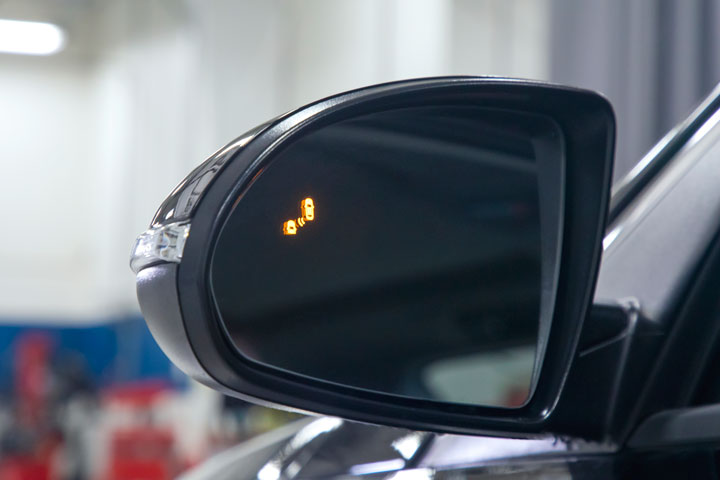
While searching for information on advanced driver assistance systems (ADAS) on an OEM repair information site, you may come across unique calibration procedures or events. These events can vary by year and model, even within a particular make. As the RTS team has been researching these systems, we have been identifying these atypical circumstances. In order to help you better understand them, we are putting together a series of articles that help with the repair and calibration of ADAS. Let’s take a closer look at the Kia blind spot systems.

Per your requests, we are adding step-by-step instructions on how to access the vehicle maker repair information to complement our how-to-videos on the OEM Information pages. Easily reference this article by clicking the link under the video on the Tesla OEM Information page.
Why do I need a subscription to an OEM website if I have full subscription access to the I-CAR Repairability Technical Support (RTS) portal? This is a question received on a regular basis through Ask I-CAR. Let’s take a look at why and how to purchase an OEM subscription.
As the industry continues to ask if pre- and post-repair system scanning is necessary, Toyota/Lexus/Scion provides their answer.
Are you wondering if a particular OEM or organization has a published statement on pre-repair and post-repair scanning? We have compiled a list of most of the statements on the subject, so you can...
Since advanced driver assistance systems (ADAS), scanning, and calibration first started becoming relevant, members of the collision repair industry have required as much knowledge as possible on...
BMW has released a position statement related to pre- and post-repair system scanning. The statement applies to All vehicles equipped with on board diagnostics II (OBD II).
Honda/Acura has updated their position statement on pre- and post-repair scanning to give additional clarification on what is expected for scanning.
The I-CAR best practice article, Recycled Outer Quarter Panels w/Rolled Hem Flanges has gotten a lot of interest from the collision repair industry. It’s important to know which vehicles are...
As the industry continues to ask, are pre- and post-repair scans necessary, General Motors provides their answer.
Over the past few months, we've been sharing OEM position statements on restraints wiring repairs. Now we're bringing them all together in one place for easy reference.
Technicians should be aware of what’s required to keep advanced driver assistance systems (ADAS) running safely after a collision. Whether that be aiming a camera, which can cause a system to not...
FCA/Stellantis has released a position statement related to pre- and post-repair system scanning.
General Motors (GM) has a position statement on trailer hitch repair, first released in June 2026 and revised in September 2026.
Sometimes seeing is understanding, that’s why I-CAR's technical team created the Just in Time video series to guide you through a variety of collision repair topics from ADAS and EVs to repair tips...
Attending the SEMA Show in Las Vegas this year? Well, I-CAR will be providing many different opportunities to connect with you at this year’s show.
One of the top technical inquires received at Ask I-CAR, "Is there a sectioning or partial replacement procedure available?" To help answer this question, RTS has an OEM Partial Part Replacement...
One of the top technical inquiries received at Ask I-CAR, “Is there a sectioning or partial replacement procedure available?” To help answer this question, RTS has an OEM Partial Part Replacement...
I-CAR is having a discussion on FCA/Stellantis sectioning guidelines.
Sometimes, going back to basics can make the difference between a quality repair and a failed repair. There are a few things to keep in mind when it comes to GMA welding with adhesive bonding.
What should you do when a damaged Lucid comes into your repair facility? Do you measure it? Can it be straightened? What needs to be replaced?
We are often asked, “What do I do if there isn’t a procedure to replace a service part?” Let’s see what Toyota/Lexus says.
As the industry continues to ask, are pre- and post-repair scans necessary, Lucid provides their answer.