Close
|
|


|
|
A simple bumper repair on a modern vehicle may not be as simple as it seems. New technologies like blind spot monitoring, adaptive cruise control, and other advanced driver assistance systems (ADAS) utilize sensors behind the bumper covers. The ability for these sensors to be able to see clearly normally requires special caution when considering a bumper repair. Many OEMs have different levels of warnings when it comes to repairing bumper covers with ADAS. So, what does FCA/Stellantis say on the subject?
While researching OEM repair information, you may come across specific notes, instructions, or warnings for high-voltage (HV) vehicles. Some general procedures can be easily overlooked, so it’s important to identify these circumstances.
I-CAR has developed a course that provides an overview of several features on the 2022 RAM ProMaster, as well as repairability.
Some FCA/Stellantis vehicles use active air dams underneath the front bumper cover to improve the aerodynamics of the vehicle. With active air dams, comes some considerations when removing and installing a front bumper cover. Let’s take a look at what FCA/Stellantis has to say.
When researching calibration procedures for advanced driver assistance systems (ADAS), you may notice that many of the procedures require the use of specific tools. Some tools may be everyday items like string, tape, levels, paper, etc. However, many of them are OEM-specific tools or scan tools. Often identifying and locating where to purchase these specific tools can be difficult.
While searching for information on advanced driver assistance systems (ADAS) on an OEM repair information site, you may come across unique calibration procedures or events. These events can vary by year and model, even within a particular make. As the RTS team has been researching these systems, we have been identifying these atypical circumstances. In order to help you better understand them, we put together a series of articles that help with the repair and calibration of ADAS. Let’s look at the RAM Drivers Assistance System Module (DASM).
While researching body repair manuals (BRM) and service manuals, we're creating OEM-specific articles for additional information needed when repair planning. The goal of these articles is to help repairers create a more complete and accurate repair plan. One key aspect of repair planning is being aware of the advanced driver assistance systems (ADAS) equipped on the vehicle. Let’s take a closer look at FCA/Stellantis.
Looking for more information about a specific repair procedure? Some OEMs are now providing videos within the repair procedures on their service site. Vehicle makers may also have additional websites that contain repair videos. As we research OEM websites and find these helpful videos, we will write articles to let you know. Let’s take a closer look at FCA/Stellantis.
While doing research on FCA/Stellantis for the RTS OEM Calibration Requirements Search, the RTS team noticed on some of the ADAS, there is a procedure called a “PROXI alignment”. We have researched what this means in order to give you clarity, in the event you see this procedure mentioned in the service manual.
As part of the I-CAR Repairability Technical Support (RTS) OEM linking pin activity, we are helping to connect the collision repair industry to the vehicle makers. Recently we had a technical inquiry that asked if FCA/Stellantis allows park assist sensors to be refinished.
Since advanced driver assistance systems (ADAS), scanning, and calibration first started becoming relevant, members of the collision repair industry have required as much knowledge as possible on these subjects. I-CAR’s Repairability Technical Support (RTS) team continues to be on the leading edge of research and education. Our goal is to help communicate information to the industry, and a great way to do this is through Collision Repair News articles.
Navigating OEM websites can be challenging when searching for collision repair procedures, especially as no two OEM websites are alike. What happens when you need to find other types of repair information, such as, "What needs to be inspected after a supplemental restraints system (SRS) deployment?", or "Does the tire pressure monitoring system (TPMS) require a scan tool or specialty tool?" Let's take a closer look at the FCA/Stellantis website.
As a collision repair technician, there is one part of a service manual that houses all of the information you would ever need…right? This is not the case with modern vehicles. You may be required to look in numerous manuals to find the information required to safely repair the vehicle.
The RTS team attended the Media Preview at the Chicago Auto Show this week. At the show was the FCA/Stellantis all new 2019 RAM 1500. The RAM should be on dealer lots in the first half of 2018. There have been many changes to the RAM for this latest generation including, the use of new materials.
Now that the new year is underway, let’s take a look at some of your favorite things from 2017. Let's start with your favorite articles.
The addition of the OEM Calibration Requirements Search to the RTS portal was a big step for the collision industry. While this new feature has been well received, there has been some confusion about what is included in the search tool. OEM Calibration Requirements Search is designed to provide information on the calibration requirements that are needed for vehicles equipped with advanced driver assistance systems (ADAS). This includes systems such as adaptive cruise control, lane keep assist, and collision braking.
The role of the windshield is a lot more complex than simply allowing a view of the road ahead. It is considered a structural part of the vehicle as it contributes to the strength of the roof and A-pillars. The windshield helps to manage collision energy and has become an integral part of several advanced safety systems.
FCA/Stellantis has released a position statement related to pre- and post-repair system scanning.
The role of the windshield is a lot more complex than simply allowing a view of the road ahead. It is considered a structural part of the vehicle as it contributes to the strength of the roof and A-pillars. The windshield helps to manage collision energy and has become an integral part of several advanced safety systems.
Park assist sensors are part of the park assist system, just one of many advanced driver assistance systems (ADAS) found on vehicles today. Damaged sensors are typically replaced and may require painting to match the vehicle. Vehicle makers often provide information on the painting of new sensors. Some vehicle makers do not recommend refinishing sensors with minor finish damage because excessive paint thickness may adversely affect the operation of the park assist system. However, other vehicle makers allow refinishing and provide guidelines. Let’s see what Rolls-Royce has to say.
As a collision repair technician, there is one part of a service manual that houses all of the information you would ever need…right? This is not the case with modern vehicles. You may be required to look in numerous manuals to find the information required to safely repair the vehicle.
Since advanced driver assistance systems (ADAS), scanning, and calibration first started becoming relevant, members of the collision repair industry have required as much knowledge as possible on these subjects. I-CAR’s Repairability Technical Support (RTS) team continues to be on the leading edge of research and education. Our goal is to help communicate information to the industry, and a great way to do this is through Collision Repair News articles.
Park assist sensors are part of the park assist system, just one of many advanced driver assistance systems (ADAS) found on vehicles today. Damaged sensors are typically replaced and may require painting to match the vehicle. Vehicle makers often provide information on the painting of new sensors. Some vehicle makers do not recommend refinishing sensors with minor finish damage because excessive paint thickness may adversely affect the operation of the park assist system. However, other vehicle makers allow refinishing and provide guidelines. Let’s see what Subaru has to say.
When researching calibration procedures for advanced driver assistance systems (ADAS), you may notice that many of the procedures require the use of specific tools. Some tools may be everyday items like string, tape, levels, paper, etc. However, many of them are OEM-specific tools or scan tools. Often identifying and locating where to purchase these specific tools can be difficult.
While searching for information on advanced driver assistance systems (ADAS) on an OEM repair information site, you may come across unique calibration procedures or events. These events can vary by year and model, even within a particular make. As the RTS team has been researching these systems, we have been identifying these atypical circumstances. In order to help you better understand them, we are putting together a series of articles that help with the repair and calibration of ADAS. Let's look at where to find the Subaru EyeSight calibration information.
While searching for information on advanced driver assistance systems (ADAS) on an OEM repair information site, you may come across unique calibration procedures or events. These events can vary by year and model, even within a particular make. As the RTS team has been researching these systems, we have been identifying these atypical circumstances. In order to help you better understand them, we are putting together a series of articles that help with the repair and calibration of ADAS. Let’s look at where to find the print button for documentation.
A simple bumper repair on a modern vehicle may not be as simple as it seems. New technologies like blind spot monitoring, adaptive cruise control, and other advanced driver assistance systems (ADAS) utilize sensors behind the bumper covers. The ability for these sensors to be able to see clearly, normally requires special caution when considering a bumper repair. Many OEMs have different levels of warnings when it comes to repairing bumper covers with ADAS. So, what does Subaru say on the subject?
While searching for information on advanced driver assistance systems (ADAS) on an OEM repair information site, you may come across unique calibration procedures or events. These events can vary by year and model, even within a particular make. As the RTS team has been researching these systems, we have been identifying these atypical circumstances. In order to help you better understand them, we are putting together a series of articles that help with the repair and calibration of ADAS. Let’s look at the Subaru Steering Responsive Headlight (SRH) system.
Subaru has updated their position statement on pre- and post-repair system scanning. The updated position statement defines what Subaru considers a collision.
Subaru offers many online publications on its paid service site, from owner’s manuals to service manuals. These are essential resources when servicing and/or repairing a vehicle. There is, however, one you may not be aware of, or may not have thought to utilize - the New Car Information manual.
The I-CAR Repairability Technical Support (RTS) team recently developed a new I-CAR 360 video on the 2019 Subaru Legacy. The video provides a 360° tour around the new Legacy. Let’s take a look.
While many have noticed that advanced driver assistance systems (ADAS) are showing up on vehicles, there still is confusion on what is required of these systems after a collision occurs. The Ask I-CAR team frequently gets questions in regard to calibration of ADAS. Many of these questions can be answered simply by searching the OEM Calibration Requirements Search. However, there are some questions that may need more details than the calibration search provides. Let’s take a look at the 2019 Subaru Crosstrek ADAS.
Subaru is releasing their 2020 Outback with a lot of noteworthy changes. The first major change is the engine. Not seen for roughly a decade, Subaru is once again offering a turbocharged engine. On the Outback XT, a 2.4-liter turbocharged BOXER engine comes standard.
Since advanced driver assistance systems (ADAS), scanning, and calibration first started becoming relevant, members of the collision repair industry have required as much knowledge as possible on these subjects. I-CAR’s Repairability Technical Support (RTS) team continues to be on the leading edge of research and education. Our goal is to help communicate information to the industry, and a great way to do this is through Collision Repair News articles.
As a collision repair technician, there is one part of a service manual that houses all of the information you would ever need…right? This is not the case with modern vehicles. You may be required to look in numerous manuals to find the information required to safely repair the vehicle.
The upcoming 2019 Subaru Forrester is part of the new Subaru Global Platform, which looks to improve upon safety and driver comfort. The Forester is a big seller for Subaru, second only to the Outback. This means that technicians will inevitably be seeing the Forester in the future.
Navigating OEM websites can be challenging when searching for collision repair procedures, especially as no two OEM websites are alike. What happens when you need to find other types of repair information, such as, "What needs to be inspected after a supplemental restraints system (SRS) deployment", or "Does the tire pressure monitoring system (TPMS) require a scan tool or specialty tool?" Let's take a closer look at the Subaru website.
Collision repairs on vehicles equipped with advanced driver assistance systems (ADAS) can have more restrictions than vehicles without ADAS. Items that historically would be a simple repair, may now need to be replaced. The ADAS needs to be able to see/sense in some way, whether it be by radar, camera-view, ultrasonic, etc. Repairers need to keep sensor/camera field of vision clear to avoid system malfunctions. For example, repair material that would normally be used to repair a gouge in a bumper cover is now a problem because it can block the sensor’s field of vision and may not allow the sensor to function properly.
Collision repairs on vehicles equipped with advanced driver assistance systems (ADAS) can have more restrictions than vehicles without ADAS. Items that historically would be a simple repair may now need to be replaced. The ADAS needs to be able to see/sense in some way, whether it be by radar, camera-view, ultrasonic, etc. Repairers need to keep sensor/camera field of vision clear to avoid system malfunctions. For example, repair material that would normally be used to repair a gouge in a bumper cover is now a problem because it can block the sensor’s field of vision and may not allow the sensor to function properly.
The addition of the OEM Calibration Requirements Search to the RTS portal was a big step for the collision industry. While this new feature has been well received, there has been some confusion about what is included in the search tool. The OEM Calibration Requirements Search is designed to provide information on the calibration requirements that are needed for vehicles equipped with advanced driver assistance systems (ADAS). This includes systems such as adaptive cruise control, lane keep assist, and collision braking.
The role of the windshield is a lot more complex than simply allowing a view of the road ahead. It is considered a structural part of the vehicle as it contributes to the strength of the roof and A-pillars. The windshield helps to manage collision energy and has become an integral part of several advanced safety systems.
A simple bumper repair on a modern vehicle may not be as simple as it seems. New technologies like blind spot monitoring, adaptive cruise control, and other advanced driver assistance systems (ADAS) utilize sensors behind the bumper covers. The ability for these sensors to be able to see clearly, normally requires special caution when considering a bumper repair. Many OEMs have different levels of warnings when it comes to repairing bumper covers with ADAS. So, what does Tesla say on the subject?
We often receive the Ask I-CAR inquiry: "Does Tesla have a position statement on pre- and post-repair system scanning? Do they plan on coming out with one?"
What is a non-SRS wiring repair? It is the repairing of an electrical component that is not part of the supplemental restraints system circuit (usually identified by yellow wire looms). As technology increases on vehicles, so does the number of components that utilize electricity. Many of the sensors and modules are becoming smarter and more sensitive. If the wire is too long, the wrong gauge, or spliced in the wrong location, it can cause malfunctions in the components that it’s powering. Many OEMs have different restrictions and guidelines for repairing wiring that does not control SRS components. On the other hand, there are OEMs that don’t allow wiring repairs at all, so full harness replacement is the only option.
Park assist sensors are part of the park assist system, just one of many advanced driver assistance systems (ADAS) found on vehicles today. Damaged sensors are typically replaced and may require painting to match the vehicle. Vehicle makers often provide information on the painting of new sensors. Some vehicle makers do not recommend refinishing sensors with minor finish damage because excessive paint thickness may adversely affect the operation of the park assist system. However, other vehicle makers allow refinishing and provide guidelines. Let’s see what Tesla has to say.
The addition of the OEM Calibration Requirements Search to the RTS portal was a big step for the collision industry. While this new feature has been well received, there has been some confusion about what is included in the search tool. The OEM Calibration Requirements Search is designed to provide information on the calibration requirements that are needed for vehicles equipped with advanced driver assistance systems (ADAS). This includes systems such as adaptive cruise control, lane keep assist, and collision braking.
Navigating OEM websites can be challenging when searching for collision repair procedures, especially as no two OEM websites are alike. What happens when you need to find other types of repair information, such as, "What needs to be inspected after a supplemental restraints system (SRS) deployment?", or "Does the tire pressure monitoring system (TPMS) require a scan tool or specialty tool?" Let's take a closer look at the Tesla website.
Since advanced driver assistance systems (ADAS), scanning, and calibration first started becoming relevant, members of the collision repair industry have required as much knowledge as possible on these subjects. I-CAR’s Repairability Technical Support (RTS) team continues to be on the leading edge of research and education. Our goal is to help communicate information to the industry, and a great way to do this is through Collision Repair News articles.
As a collision repair technician, there is one part of a service manual that houses all of the information you would ever need…right? This is not the case with modern vehicles. You may be required to look in numerous manuals to find the information required to safely repair the vehicle.
The role of the windshield is a lot more complex than simply allowing a view of the road ahead. It is considered a structural part of the vehicle as it contributes to the strength of the roof and A-pillars. The windshield helps to manage collision energy and has become an integral part of several advanced safety systems.
It is commonly asked, "What is required when replacing a windshield?" With this question in mind, we have a series of articles that highlight some of the requirements from the various OEMs. As always, it is important to read through each vehicle-specific procedure to ensure a complete, safe, and quality repair.
A group of vehicle makers got together recently and discussed the future of automatic emergency braking (AEB) technology in their vehicles. This feature is designed to reduce the severity and frequency of collisions; but no matter how good it is, it will never prevent all accidents from happening. So what do you need to know in order to repair vehicles with AEB, and how do you know the system is functioning properly?
*Results are compiled from matches in OEM Partial Part Replacement, OEM Restraints System Part Replacement, and OEM Hybrid and Electric Vehicle Disable. Use the search bar at the top of the page to find relevant Collision Repair News articles.

 What does the vehicle maker say?
 The information that matters.
 Does it need to be calibrated?
 Can that part be sectioned?
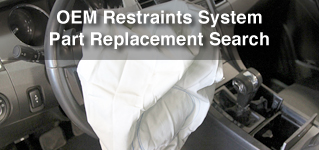 What parts need to be replaced?
 Where's the high-voltage disable procedure?
 What are the OEM glass requirements?
 What's the best practice for repairs?
 How do you navigate the RTS portal?
 Have a collision repair question?