Close
|
|


|
|
Follow us on 
@Ask_ICAR for daily updates.
Your job requires that you keep on top of the latest in vehicle, tool, and equipment technology – I-CAR is committed to helping you do so in one convenient place. We regularly publish new articles highlighting the latest and greatest collision repair information.
So check back often and follow us on X @Ask_ICAR to ensure you’re equipped with the most up-to-date collision repair technical information available in the industry.
A key factor in collision repair is making long-lasting repairs. When a vehicle is repaired, many areas of corrosion protection are disturbed. This creates corrosion hot spots that left untreated will lead to corrosion and potentially a repair failure. However, there are certain precautions that can be taken to safely and properly restore the corrosion protection throughout the repair process. OEMs often give specifications on restoring corrosion protection. These specifications generally include seam sealer, adhesives, foam fillers, and cavity waxes. Let’s take a look at what Kia says.
The addition of the OEM Calibration Requirements Search to the RTS portal was a big step for the collision industry. While this new feature has been well received, there has been some confusion about what is included in the search tool. The OEM Calibration Requirements Search is designed to provide information on the calibration requirements that are needed for vehicles equipped with advanced driver assistance systems (ADAS). This includes systems such as adaptive cruise control, lane keep assist, and collision braking.
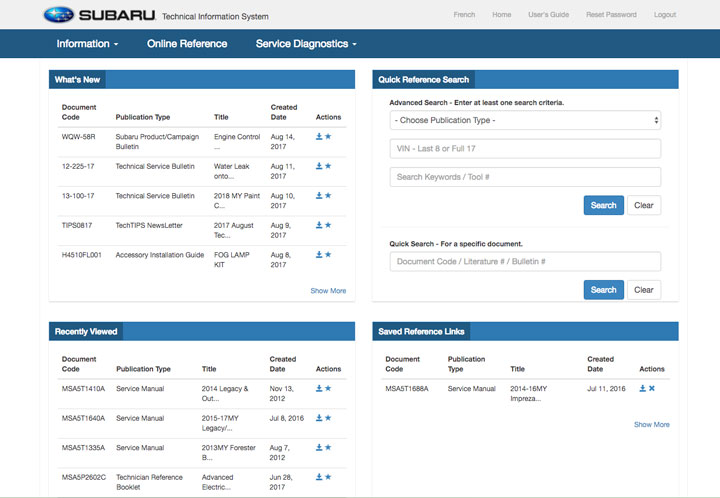
Subaru has changed the layout of their repair information website. You will notice that the site has a new look and improved navigation. Convenient new features make finding repair information easier. Let’s take a look at what has changed.
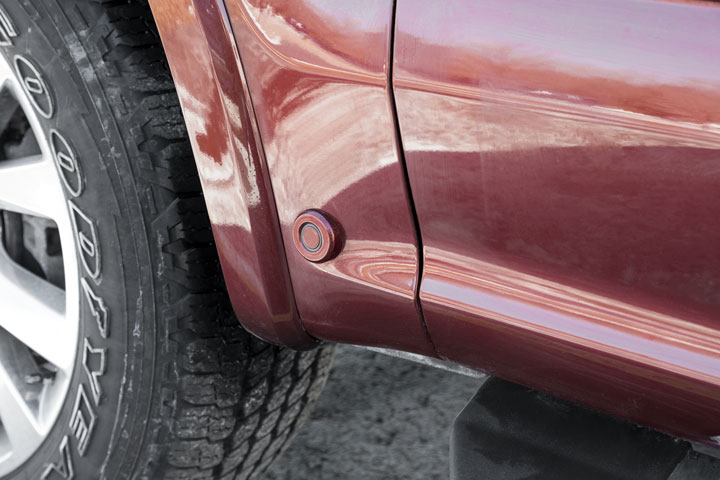
A key part of being able to diagnose a problem with advanced driver assistance systems (ADAS) is understanding how the system works. Knowing what is happening inside the system will help you properly diagnose why the system may be failing. This will prevent replacing parts that are not causing the system issue. Let’s take a look at the inner workings of a park assist system.
A key factor in collision repair is making long-lasting repairs. When a vehicle is repaired, many areas of corrosion protection are disturbed. This creates corrosion hot spots that left untreated will lead to corrosion and potentially a repair failure. However, there are certain precautions that can be taken to safely and properly restore the corrosion protection throughout the repair process. OEMs often give specifications on restoring corrosion protection. These specifications generally include seam sealer, adhesives, foam fillers, and cavity waxes. Let’s take a look at what Jaguar Land Rover (JLR) says.
The addition of the OEM Calibration Requirements Search to the RTS portal was a big step for the collision industry. While this new feature has been well received, there has been some confusion about what is included in the search tool. The OEM Calibration Requirements Search is designed to provide information on the calibration requirements that are needed for vehicles equipped with advanced driver assistance systems (ADAS). This includes systems such as adaptive cruise control, lane keep assist, and collision braking.
What is the MPa of the front lower rail? What is the outer uniside made of: steel, aluminum, or composite? Can heat be used to straighten or is it cold straightening only? What are the repair limitations? These are just some of the questions that the RTS team fields on a daily basis.
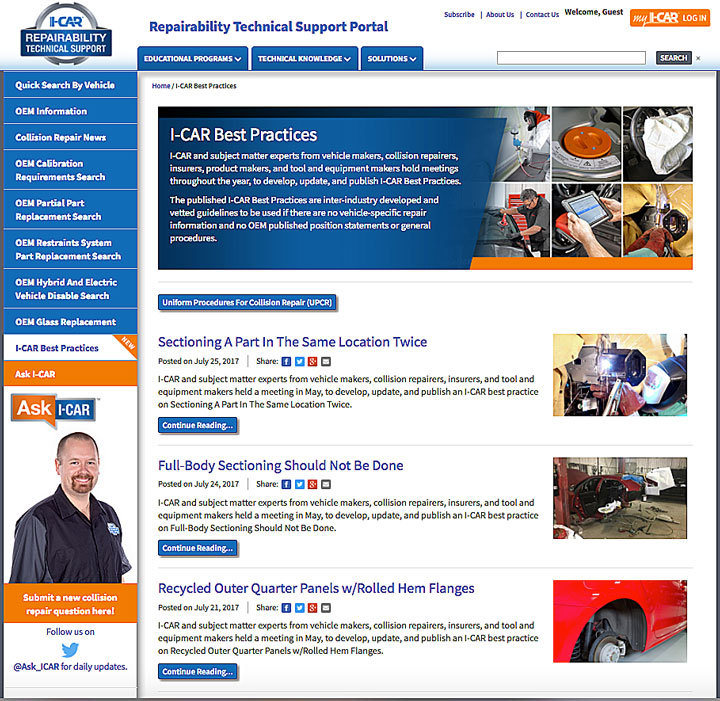
What if there isn’t vehicle-specific repair procedure, OEM position statements, or OEM general information available for a given topic?
To answer the industry request for assistance in closing gaps with this type of information, I-CAR has consistently held I-CAR Repairability Summits. These repairability summits bring together subject matter experts from vehicle makers, collision repairers, insurers, product makers, and tool and equipment makers to collaborate on industry developed and vetted Best Practices. Now all these best practices have been complied in one convenient location. Let’s take a look at the all new I-CAR Best Practices page.
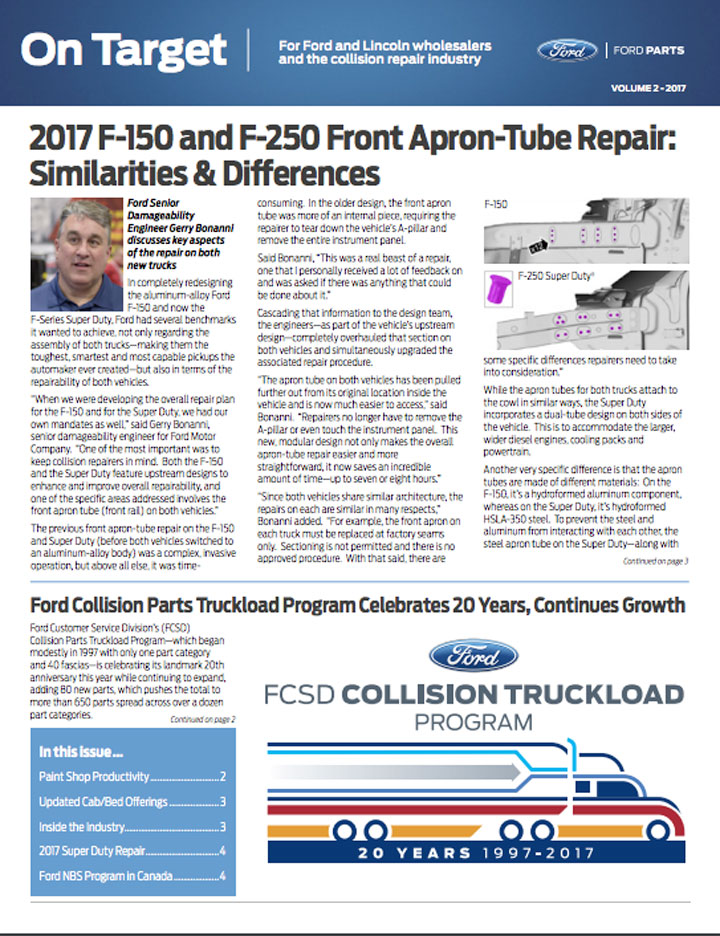
Ford has released the second installment of their On Target publication for 2017. Features of this volume include repair procedures, future technologies, and replacement parts availability. Let’s take a look at this issue of On Target.
When it comes to collision repair questions, we are often asked, “What Does I-CAR Say?" Fortunately, Jason Bartanen, Director of Industry Technical Relations at I-CAR, had an opportunity to discuss the answers via Collision Hub: Repair University Live at NACE (the International Autobody Congress & Exposition) this year. Let’s see what I-CAR has to say.

The kink vs. bend rule states that kinked parts must be replaced (no argument there), but bent parts may be a candidate for repair (wait a minute?!?). The kink vs. bend rule is no longer as simple as it sounds. Let’s take a closer at how this rule has evolved with the vehicle.
Subaru’s position statements can now be access directly from the I-CAR RTS Portal. These position statements are housed in the Subaru OEM Information page. Let’s take a look at what these position statements include.
What is the MPa of the front lower rail? What is the outer uniside made of: steel, aluminum, or composite? Can heat be used to straighten or is it cold straightening only? What are the repair limitations? These are just some of the questions that the RTS team fields on a daily basis.
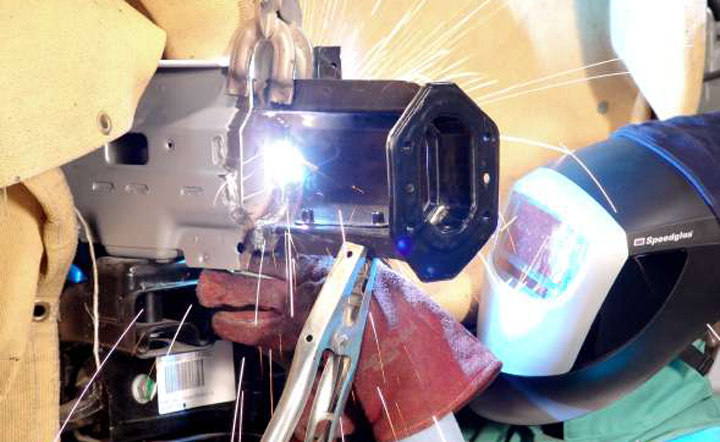
Periodically, I-CAR Repairability Summits are held to bring together collision industry stakeholders and subject matter experts to develop collision repair processes and best practices for repair of late-model, collision damaged vehicles. In the I-CAR Repairability Summit the topic of Sectioning A Part In The Same Location Twice was discussed.
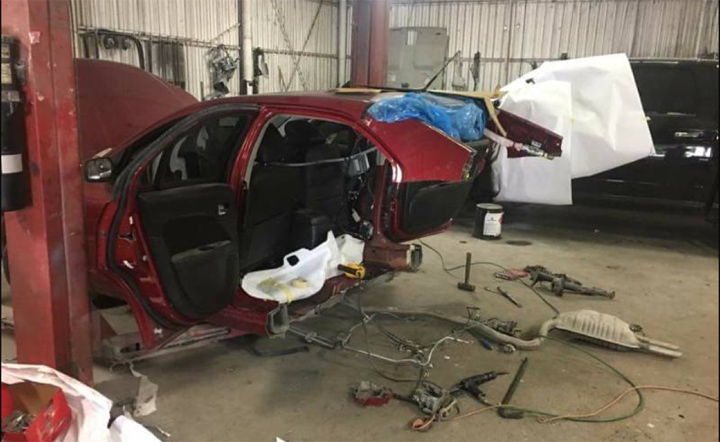
Periodically, I-CAR Repairability Summits are held to bring together collision industry stakeholders and subject matter experts to develop collision repair processes and best practices for repair of late-model, collision damaged vehicles. In the I-CAR Repairability Summit the topic of can full-body sectioning be done was discussed.
As the industry continues to ask if pre- and post-repair system scanning is necessary, Toyota/Lexus/Scion provides their answer.
Are you wondering if a particular OEM or organization has a published statement on pre-repair and post-repair scanning? We have compiled a list of most of the statements on the subject, so you can...
Since advanced driver assistance systems (ADAS), scanning, and calibration first started becoming relevant, members of the collision repair industry have required as much knowledge as possible on...
BMW has released a position statement related to pre- and post-repair system scanning. The statement applies to All vehicles equipped with on board diagnostics II (OBD II).
Honda/Acura has updated their position statement on pre- and post-repair scanning to give additional clarification on what is expected for scanning.
The I-CAR best practice article, Recycled Outer Quarter Panels w/Rolled Hem Flanges has gotten a lot of interest from the collision repair industry. It’s important to know which vehicles are...
As the industry continues to ask, are pre- and post-repair scans necessary, General Motors provides their answer.
Over the past few months, we've been sharing OEM position statements on restraints wiring repairs. Now we're bringing them all together in one place for easy reference.
Technicians should be aware of what’s required to keep advanced driver assistance systems (ADAS) running safely after a collision. Whether that be aiming a camera, which can cause a system to not...
FCA/Stellantis has released a position statement related to pre- and post-repair system scanning.
Sometimes seeing is understanding, that’s why I-CAR's technical team created the Just in Time video series to guide you through a variety of collision repair topics from ADAS and EVs to repair tips...
Attending the SEMA Show in Las Vegas this year? Well, I-CAR will be providing many different opportunities to connect with you at this year’s show.
One of the top technical inquires received at Ask I-CAR, "Is there a sectioning or partial replacement procedure available?" To help answer this question, RTS has an OEM Partial Part Replacement...
One of the top technical inquiries received at Ask I-CAR, “Is there a sectioning or partial replacement procedure available?” To help answer this question, RTS has an OEM Partial Part Replacement...
I-CAR is having a discussion on FCA/Stellantis sectioning guidelines.
Sometimes, going back to basics can make the difference between a quality repair and a failed repair. There are a few things to keep in mind when it comes to GMA welding with adhesive bonding.
What should you do when a damaged Lucid comes into your repair facility? Do you measure it? Can it be straightened? What needs to be replaced?
We are often asked, “What do I do if there isn’t a procedure to replace a service part?” Let’s see what Toyota/Lexus says.
As the industry continues to ask, are pre- and post-repair scans necessary, Lucid provides their answer.
I-CAR had a discussion on Ford advanced driver assistance systems (ADAS) considerations.