 Print
PrintQuality repairs are essential for customer safety and satisfaction, not to mention the time saved preventing rework and comebacks. Ensuring quality repairs are completed on each and every vehicle requires a commitment from the entire team. However, the manager is primarily responsible for making sure everyone is aware of the level of quality that is expected and verifying only high-quality repairs are being completed. This will require knowing how to identify high quality repairs and ensuring that poor repairs are corrected before the vehicle is returned to the customer, or before the vehicle is moved to the next phase of the repair process.
Inspection checklists can be used by both the technicians and managers to monitor and document the quality of the repairs on each vehicle. A checklist will provide the technician some guidance, or structure, to ensure each step necessary for a quality repair is completed. The manager, or designated quality control technician, can verify the tasks on the checklist were completed and mark the checklist accordingly.
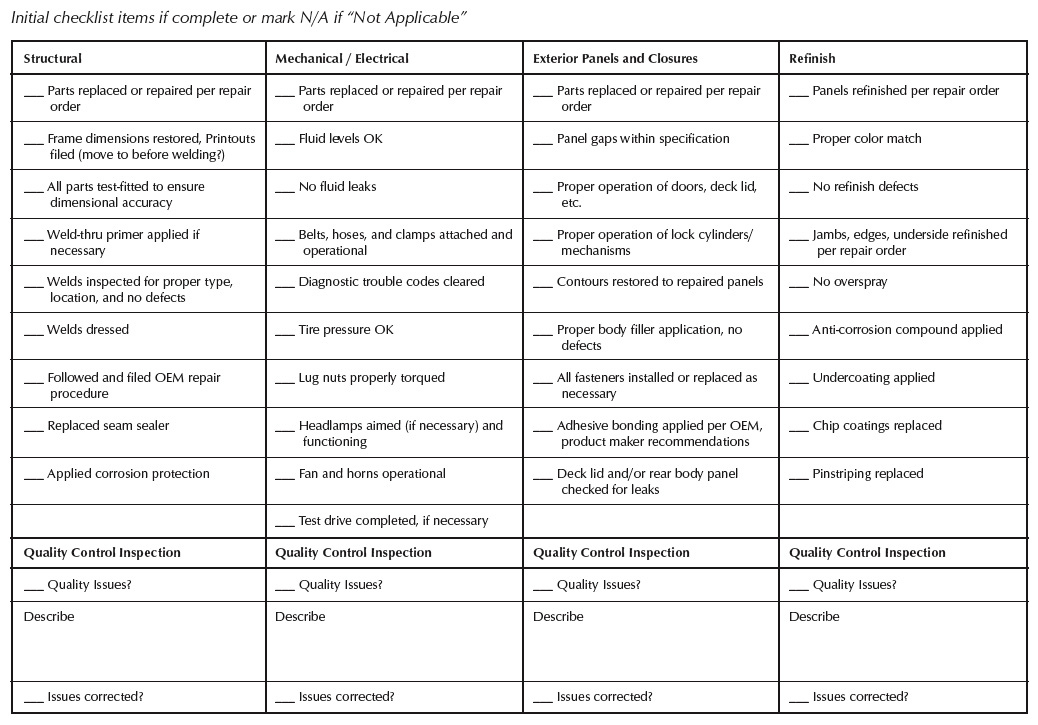 Figure 1 - The bottom section on this sample inspection checklist provides an area to describe any quality issues, and an area that must be initialed by the manager to verify any issues were corrected.
Inspection Checklists
It's a good idea to use a checklist that's designed to be signed off by a manager or quality control technician before the vehicle is moved to the next department. This type of checklist may have an area to describe any quality issues identified during an inspection and an area to verify the issues were corrected (see Figure 1). This will help reduce compounding rework. For example, coatings may require removal and reapplication if quality issues are not identified before the coatings are applied in the first place.
Monitoring Technician Performance
Most managers don't have time to inspect each and every repair on each and every vehicle. However, it's important to monitor technician performance on a regular basis. This can be done by recording data from inspection checklists for periodic review.
One way to monitor technician performance is to review inspection checklists on a weekly basis and record any occurrences, which are repairs where corrective action is necessary. Patterns in performance will help identify strengths in technician performance and may help determine where training may be helpful.
Documentation
Taking photos of the repair areas may be another option to monitor and document technician performance. Some repairs may only be monitored by reviewing specification sheets, such as for measuring, wheel alignment, and welding equipment. However, this may also require some in-process monitoring to ensure the technician is using the equipment properly.
Conclusion
Monitoring technician performance is essential for ensuring quality repairs are being made on all vehicles. Tools that can be used to assist with this task may include checklists and spreadsheet formulas designed to record inspection data and display the information on an easy-to-read chart.
This article first appeared in the September 7, 2010 edition of the I-CAR Advantage Online.
Additional I-CAR Collision Repair News you may find helpful:
Related I-CAR Courses
Article validated in 2025